
ARTICLES

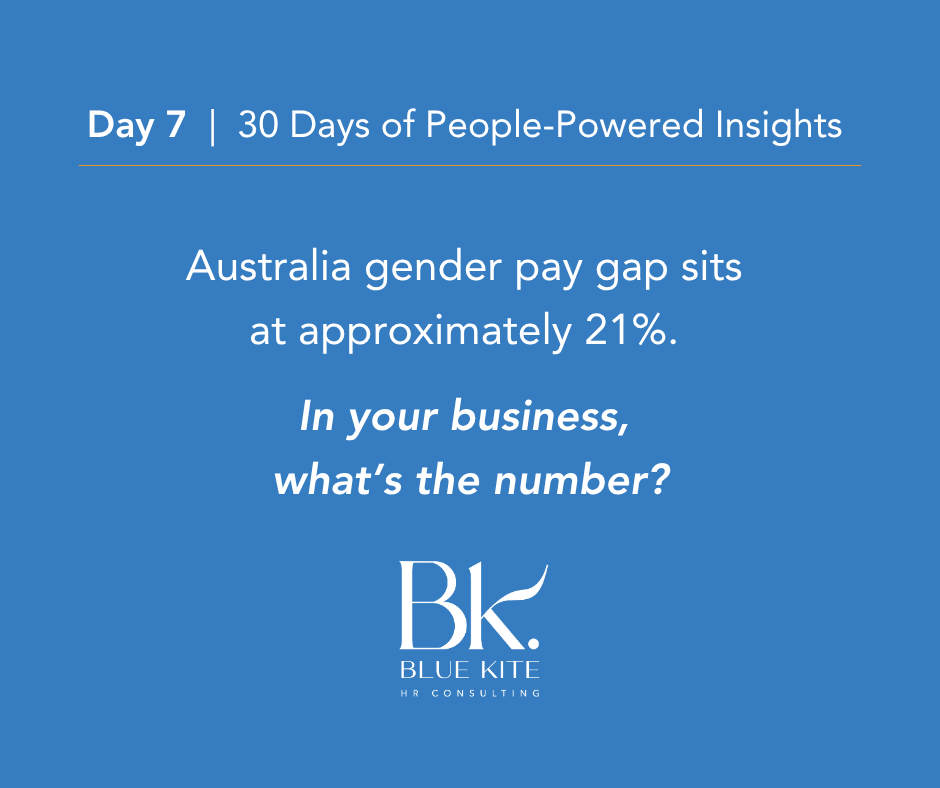
The Workplace Gender Equality Agency reports that the national gender pay gap in Australia currently sits at around 19%. For small and medium businesses not required to report to WGEA, the figure is largely invisible — which is part of the problem.
Most business owners who have a gender pay gap don’t have one because they deliberately underpay women. They have one because pay decisions accumulate over time in ways nobody closely examines: starting salaries that were negotiated differently, promotions that happened for one group more readily than another, senior roles that were filled in ways that seemed reasonable at the time. The gap isn’t usually one bad decision. It’s hundreds of small decisions with a consistent pattern.
Where Gaps Come From in Small and Medium Businesses
Starting salaries are a primary driver. Research consistently shows that women are less likely to negotiate on a first offer, and more likely to face pushback when they do. If you’re setting starting pay based on what the candidate asks for or accepts, rather than on what the role is worth in the market, you’re almost certainly building inequality into your pay structure from day one.
Career progression is another key factor. In many SMEs, advancement depends heavily on visibility and relationships with senior leadership. If your leadership team is predominantly male and tends to sponsor people who remind them of themselves — even unconsciously — women will advance more slowly, which means the pay gap widens over time.
Parental leave and its aftermath contribute significantly too. Women who take primary carer leave often return to roles that have been informally reorganised, miss out on pay reviews during their absence, or are quietly considered for less-demanding (and lower-paid) work going forward. This is rarely intentional. It’s almost always consequential.
Practical Steps to Audit and Address It
Start with the data. Pull together the pay for all roles in your business, disaggregated by gender. If you have too few employees to do this meaningfully, look at whether your senior roles skew one way, whether roles dominated by women are classified and paid differently from comparable roles dominated by men.
Then look at your processes. Is your pay based on a structure, or on negotiation? Do you review pay regularly and consistently across all employees, or when someone asks? Is your parental leave policy applied consistently? Do women return from leave on the same pay and career trajectory?
The Workplace Gender Equality Act 2012 requires businesses with 100 or more employees to report annually to WGEA. For businesses under that threshold, the Act doesn’t require action — but the Fair Work Act’s equal remuneration provisions apply regardless of size. Equal pay for equal work isn’t aspirational. It’s a legal obligation.
The goal isn’t to treat pay equity as a compliance exercise. It’s to build a business where your compensation practices can genuinely withstand scrutiny — and where all your people feel they’re being valued for their contribution, not their gender.
Ready to build a better workplace? Book your free 30-minute consultation at Blue Kite HR Consulting

Blue Kite specialises in providing
HR services to support businesses
to create better workplaces.