
ARTICLES

Micromanagement: Why Leaders Do It and What It Costs
A café owner genuinely believed he was being supportive. He checked in on his shift supervisors multiple times an hour. He reviewed every purchase order personally. He gave detailed feedback on how the milk was being poured. Within eighteen months, he’d lost four supervisors — all capable, all citing the same reason: they felt like they had no authority and weren’t trusted to do their jobs.
Micromanagement is one of those leadership behaviours that almost no one would describe themselves as doing. And yet it’s one of the most common reasons employees cite for leaving, disengaging, or underperforming. The disconnect exists because micromanagement rarely feels like control from the inside. It usually feels like thoroughness, care, or responsibility.
Why leaders micromanage
Understanding the behaviour is the first step to addressing it. Most micromanagement comes from one of three places.
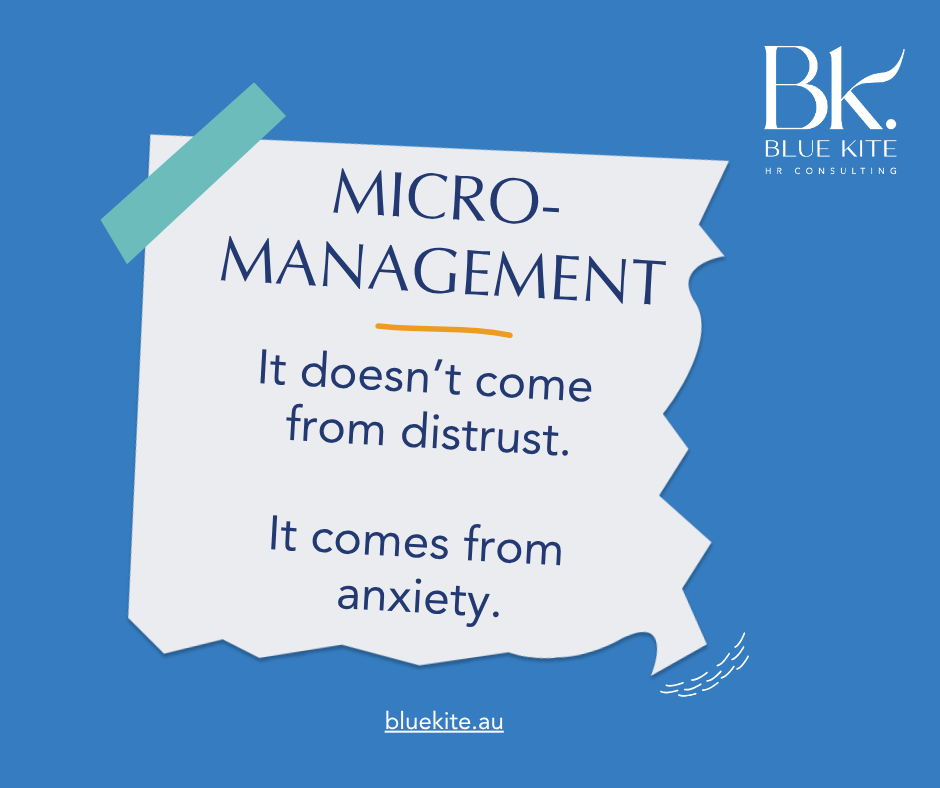
Anxiety about outcomes is the most common driver. When a leader is worried about quality, deadlines, or client satisfaction, close oversight feels like risk management. The problem is that it creates the exact conditions — reduced team capability, lower ownership, higher turnover — that make outcomes worse over time.
A transition from doing to leading that never fully happened is another major source. Many business owners and managers were promoted because they were excellent individual contributors. The skills that made them great in a hands-on role are the same ones that drive them to keep intervening. Moving into leadership requires genuinely letting go of doing, which is harder than it sounds.
A lack of trust — in the individual, the team, or the process — is the third. Sometimes this is warranted by circumstances, and close oversight is temporarily appropriate. More often, it becomes a default mode that persists long after the trust has been established.
What it actually costs a buisness
The costs are well-documented and significant. Employees who are micromanaged report lower job satisfaction, reduced initiative, and a tendency to wait for direction rather than problem-solve. Over time, they either leave — at which point you’re paying recruitment and training costs — or they stay and become exactly the passive, instruction-dependent workers the micromanager feared they’d be.
The leader also pays a price. Micromanagement is exhausting. A manager who is personally involved in every decision is a bottleneck in their own business. Their time is consumed by work that should be delegated, at the cost of strategic thinking, client relationships, and their own wellbeing.
What the path forward looks like
Moving out of micromanagement requires honest self-reflection. Which situations trigger the behaviour? Is it specific people, types of work, or levels of stakes? What’s the actual evidence that close oversight is producing better outcomes?
The practical work is in building clear expectations upfront — what does good work look like, what does the person need to succeed — then stepping back and allowing mistakes to be learning opportunities rather than reasons to intervene. Accountability and autonomy aren’t in opposition. They’re partners in building a team that works without you watching.
Ready to build a better workplace? Book your free 30-minute consultation at Blue Kite HR Consulting

Blue Kite specialises in providing
HR services to support businesses
to create better workplaces.