
ARTICLES

How to Run an Employee Engagement Survey That Produces Real Change
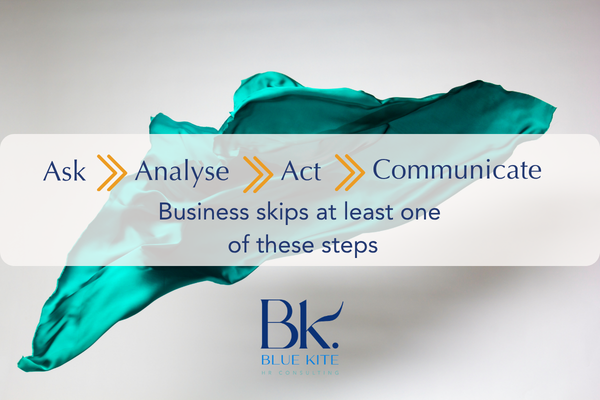
An IT services company ran an employee survey. 73% of people responded. The results were collated, shared with leadership, and filed. Eight months later, the company ran another survey. Response rate: 31%. When they dug into the drop, the answer from employees was consistent: “Nothing changed last time. Why would we bother?”
Employee engagement surveys are one of the most widely used tools in people management — and one of the most frequently misused. Run well, they give you genuine insight into what’s driving satisfaction, performance, and retention in your business. Run poorly — or followed up inadequately — they create the impression that leadership asks for feedback and then ignores it, which is often worse than not asking at all.
Why most surveys fail
The mechanics of the survey itself are rarely the problem. The failure usually happens in what comes before and after it.
Before: surveys that ask too many questions, use jargon-heavy language, or don’t connect clearly to anything actionable tend to produce low-quality responses. Employees don’t understand why they’re being asked or what will be done with their answers. Anonymity concerns — even when anonymity is technically guaranteed — suppress honest responses, particularly on sensitive topics.
After: results get shared with leadership, leadership has a conversation about them, and then the findings sit in a document while the business carries on as it was. Employees see no visible change. They conclude that the survey was performative, and trust in the process collapses.
What a survey that actually works look like
Start with a clear purpose. What decisions are you trying to make with this data? What would you change if the results confirmed a concern? If you can’t answer those questions before you run the survey, you’re not ready to run it.
Keep it focused. A survey covering five to ten well-chosen questions that connect to real decisions will produce better data than a comprehensive forty-question exercise that tries to cover everything. Consider a quarterly pulse survey model — shorter, more frequent, more actionable — rather than an annual comprehensive exercise.
Communicate before, during, and after. Employees should understand why you’re asking, how their responses will be handled, and what you plan to do with the results. After the survey, share a genuine summary — including the things that aren’t positive — and commit publicly to specific actions in response to specific findings.
Then do the things. Even one or two visible changes based on survey feedback is enough to maintain trust in the process. The message employees need to receive is: “We asked, we listened, and here’s what’s different as a result.”
A note on size
For businesses under fifty employees, anonymous surveys can feel awkward because even aggregated data can make individuals identifiable. In these settings, a mix of direct one-on-one conversations and very short team-level pulse checks often produces better outcomes than formal survey tools. The principle is the same: ask genuinely, listen carefully, and act visibly.
Ready to build a better workplace? Book a free 30-minute consultation at Blue Kite HR Consulting

Blue Kite specialises in providing
HR services to support businesses
to create better workplaces.