ARTICLES

AI in the Workplace: What HR Leaders Need to Know Now
In a recruitment firm’s Sydney office, a hiring manager started using AI to draft candidate summaries. Nobody told him to. Nobody told him not to.
Three months later, a candidate who’d been declined raised concerns that their application had been assessed by an automated tool without being told. The business had no policy, no process, and no good answer.
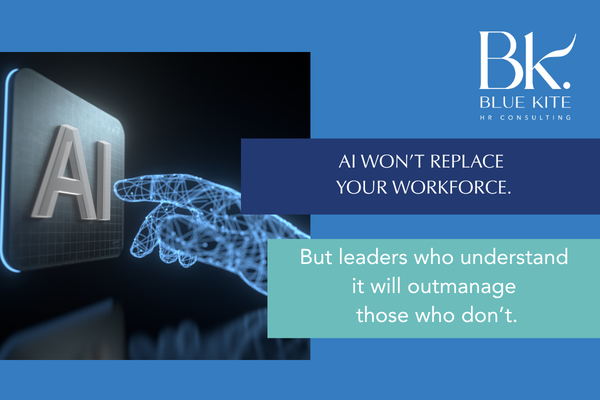
AI tools are already in your workplace. Whether your business has made deliberate decisions about them or not, it’s likely that your employees are using AI to some degree — drafting communications, summarising documents, generating reports, creating presentations. The question for business owners and HR practitioners is no longer whether to engage with this technology. It’s how to manage it with clarity, fairness, and appropriate legal awareness.
The HR risks worth taking seriously
Bias and discrimination are the most significant risk. AI tools trained on historical data can encode and amplify historical patterns — including discriminatory ones. AI used in recruitment screening, performance assessment, or promotion decisions carries genuine risk of systematically disadvantaging certain groups. Under Australian anti-discrimination law, the mechanism of discrimination doesn’t provide a defence; the outcome does. “The AI did it” is not a legal shield.
Privacy is the second area of concern. Employees have reasonable expectations about how their personal and professional data is used. When AI tools process communications, performance data, or personal information, questions about consent, data storage, and third-party access arise. The Privacy Act 1988 and its ongoing reform process are relevant here, and businesses that collect or process employee data through AI tools need to understand their obligations.
The third is transparency. Employees have a right to know when automated tools are influencing significant decisions about their employment. This is already established principle in jurisdictions including the EU and is increasingly discussed in Australian policy circles. Getting ahead of this — building disclosure into your AI use practices now — is both the ethical and strategically wise approach.
What good AI governance looks like for a SME
You don’t need a detailed AI ethics policy document to manage this responsibly. You need a few clear decisions and the discipline to implement them consistently.
Identify where AI is being used in your business. If you don’t know, ask your team — they’ll tell you, and the answer may surprise you. Map where AI touches decisions that affect employees, particularly hiring, performance, and development.
Create clear guidelines about what AI can and can’t be used for without human review. AI as a drafting tool, a summariser, or a research assistant creates very different risks than AI as a decision-maker. Keeping humans in the loop on consequential decisions about people is the core principle.
Be transparent with candidates and employees. If AI tools are used in your recruitment process, say so. If AI helps generate performance summaries that inform reviews, that context matters.
The businesses that will manage this well over the next five years are not necessarily the ones using the most AI. They’re the ones using it thoughtfully, with appropriate governance and genuine attention to fairness.
Ready to build a better workplace? Book your free 30-minute consultation at Blue Kite HR Consulting
Blue Kite specialises in providing
HR services to support businesses
to create better workplaces.