ARTICLES

The Rules Nobody Wrote Down
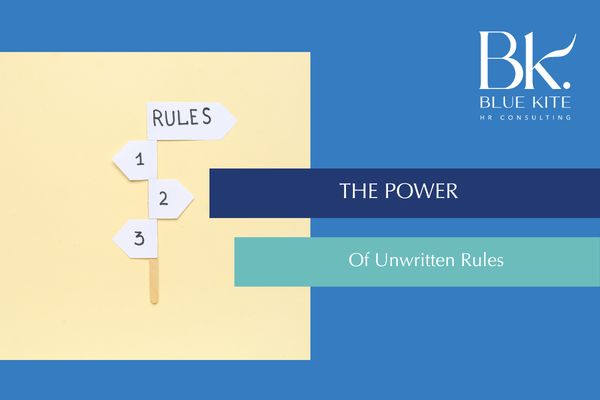
Every business has two sets of rules. The ones in the policies and procedures manual — and the ones that everyone actually follows.
The unwritten rules of a workplace are often more powerful than the formal ones. They govern how decisions are really made, whose opinion actually counts in a meeting, how much autonomy people genuinely have, which mistakes are forgiven and which are remembered. They are the invisible architecture of the business culture, and they shape behaviour far more reliably than any documented process.
The problem is that unwritten rules are learned through observation and experience, which means they are absorbed unevenly, often disadvantaging those who are newer, more junior or less culturally similar to the dominant group.
Someone who did not grow up navigating that particular culture, or who does not have a mentor to decode it, may find themselves inadvertently violating norms they did not know existed.
The more significant problem is that businesses often have no awareness of what their unwritten rules actually are. Leaders who have been in the business for years have internalised them so completely that they have become invisible — obvious to everyone inside, opaque to those trying to navigate from the outside.
Making the unwritten rules explicit through honest cultural conversations, through leadership modelling and through the willingness to ask “why do we actually do it that way?”, is one of the more valuable and underused tools in organisational development. It brings the shadow culture into the light where it can be examined, questioned and, where necessary, changed.
If you want practical support reviewing your workplace policies, contracts, leadership capability, or workplace culture, Blue Kite HR Consulting can help you take a proactive approach before issues become bigger problems.
Blue Kite specialises in providing
HR services to support businesses
to create better workplaces.