
ARTICLES

Workplace Friendships and Why They Actually Matter
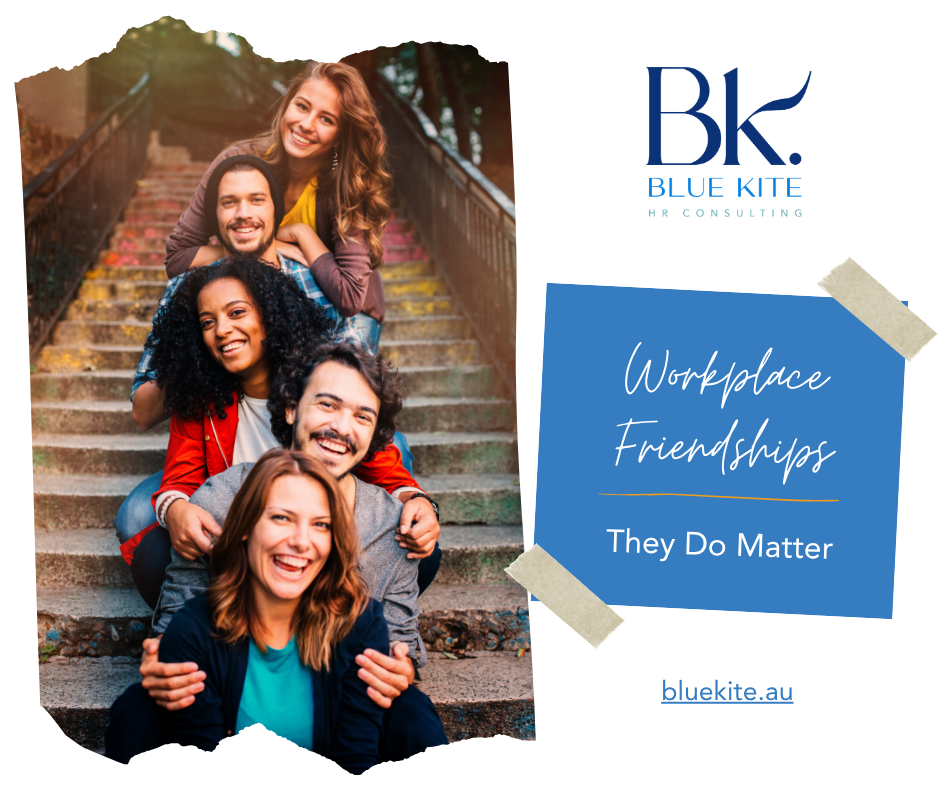
The professional advice to keep personal relationships separate from work has a long history. And in some respects it is sensible — boundary clarity matters, dual relationships can complicate professional judgment and the workplace is not a social club.
But the research on workplace friendships paints a picture that is worth sitting with. Employees who report having a genuine friend at work, someone they trust, who knows them, whom they would seek out when something is difficult, are significantly more engaged, more productive and more likely to stay.
This is not a soft finding. It connects to some fundamental human needs: the sense of belonging, of being known and of genuine social connection. When those needs are met at work, the experience of working there is transformed.
The implications for businesses are underappreciated. Culture is not just the sum of leader behaviours and HR policies. It is also the quality of the peer relationships that develop within it. Teams that know each other well, not just professionally, but as people, communicate more openly, collaborate more effectively and are more likely to surface problems early rather than managing them quietly.
The barrier for many businesses is the idea that fostering workplace friendships is outside the scope of leadership and culture strategy. In reality, the conditions that enable genuine connection — time, psychological safety, shared experience and a culture that values the person alongside the performance — are exactly the same conditions that enable everything else that organisations say they want.
Connection is not a peripheral concern. It is part of the foundation.
If you want practical support reviewing your workplace policies, contracts, leadership capability, or workplace culture, Blue Kite HR Consulting can help you take a proactive approach before issues become bigger problems.

Blue Kite specialises in providing
HR services to support businesses
to create better workplaces.