
ARTICLES

Job Design: How You Structure Roles Affects Whether People Stay
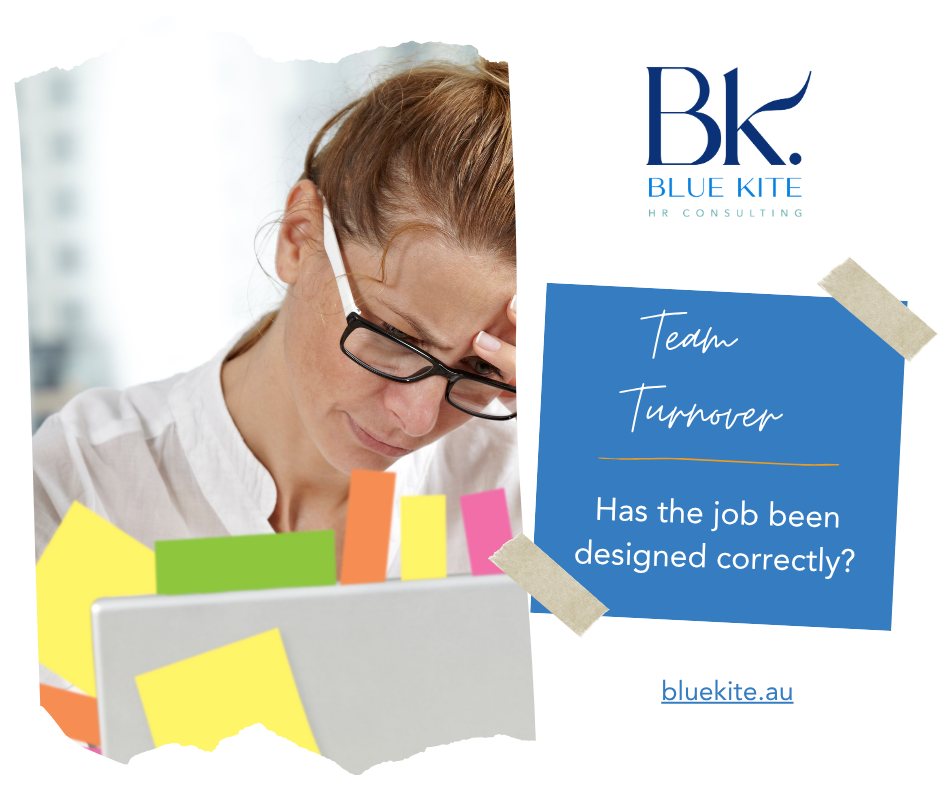
A Brisbane logistics company kept losing warehouse supervisors. Every exit interview pointed to the same thing: the role was impossible. The supervisors were expected to manage a team of twelve, run daily operations, handle all supplier escalations, cover rostering across three shifts, and also be on the tools when anyone called in sick. On paper, it was one job. In practice, it was three.
Job design doesn’t get nearly enough attention in small and medium businesses. When a role needs filling, the instinct is to write a job ad around what the business needs done — then work backwards to find someone who can do all of it. The problem is that badly designed roles drive people out faster than almost anything else.
What Job Design Actually Covers
Job design is the deliberate structuring of a role: what tasks it includes, how much autonomy the person has, how varied the work is, how clearly the role connects to larger business outcomes, and how much capacity actually exists to do the job well.
When a role is well-designed, the person in it has enough variety to stay engaged, enough clarity to manage their workload, enough autonomy to feel trusted, and enough scope to grow. When it’s poorly designed, you get overload, confusion, disengagement — and eventually, resignation.
The Fair Work Act and National Employment Standards govern a lot of the formal aspects of employment — hours, classifications, minimum entitlements — but they don’t prevent businesses from designing roles that are fundamentally unworkable. That’s a management problem, not a legal one.
The Most Common Job Design Mistakes
Overloading a role is the most prevalent issue, particularly as businesses grow. Tasks get added incrementally — “can you just handle this too?” — until a role that started as one thing has quietly become three. The person holding it never pushes back because they want to be seen as capable. Eventually they burn out or leave.
Role ambiguity is equally damaging. If someone doesn’t understand what decisions they’re authorised to make, where their responsibilities end and someone else’s begin, or what success actually looks like in their job, they’ll spend enormous energy navigating uncertainty rather than getting work done. That’s exhausting — and unnecessary.
On the other end of the spectrum, under-designed roles create boredom. A smart, capable person given work that’s too narrow or too repetitive will start looking for the next challenge — somewhere else.
How to Audit the Roles in Your Business
You don’t need a formal job design exercise to improve this. Start by asking the people in each role a few honest questions: What takes up most of your time that probably shouldn’t? What do you not have enough time to do well? What decisions do you have to escalate that you should probably be able to make yourself?
The answers will tell you quickly whether a role is overloaded, misaligned, or missing something critical. From there, you can make targeted changes — whether that’s redistributing tasks, rewriting a position description, or hiring to fill a genuine gap rather than a wish list.
Well-designed roles are one of the most powerful, and least talked about, tools for keeping good people. They’re also one of the clearest signals to candidates that your business is serious about the people who work there.
Ready to build a better workplace? Book your free 30-minute consultation at Blue Kite HR Consulting

Blue Kite specialises in providing
HR services to support businesses
to create better workplaces.