
ARTICLES

Neurodiversity at Work: Building a Genuinely Inclusive Team
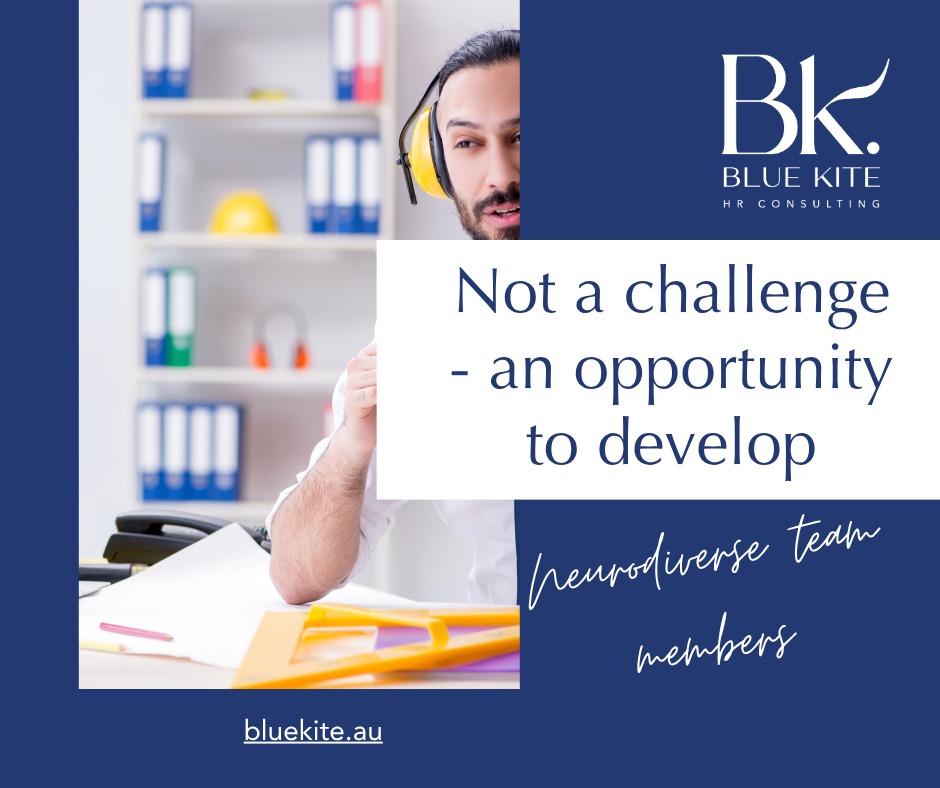
A food manufacturing business in Adelaide had a warehouse worker who was brilliant at picking errors in the production line — faster and more accurate than anyone else on the floor. He was also frequently in trouble for not following the team communication protocols. His supervisor described him as “difficult.” His colleagues thought he was “a bit odd.” What nobody had noticed, or asked about, was that he was autistic.
Once that was understood and accommodated — simple adjustments to how tasks were briefed and feedback was given — he became one of the highest performers in the operation. Nothing changed about his capability. Everything changed about how the environment was set up for him.
Neurodiversity refers to the natural variation in how human brains process information. It includes autism spectrum conditions, ADHD, dyslexia, dyspraxia, dyscalculia, and a range of other conditions. Around one in seven Australians is considered neurodivergent. In any team of reasonable size, you almost certainly already have neurodivergent employees — whether or not anyone knows it.
Why Standard Workplaces Miss Neurodivergent Talent
Most Australian workplaces are designed around a fairly narrow set of assumptions: that people communicate in particular ways, process information at roughly the same pace, work well in open-plan environments, handle ambiguity comfortably, and manage the unwritten rules of professional interaction without difficulty. For neurodivergent people, many of these assumptions don’t hold.
The result is that genuinely talented people struggle — not because they can’t do the work, but because the environment creates unnecessary friction. They may be labelled as “not a team player,” “poor communicator,” or “inconsistent performer” when the actual issue is a mismatch between how they work and how the workplace is structured.
The Fair Work Act prohibits discrimination on the basis of disability, which in many cases covers neurodivergent conditions. But compliance is a floor, not a ceiling. Building an environment where neurodivergent people can genuinely thrive requires going further.
What Inclusive Workpalces Actually Do Differently
The adjustments that make workplaces more accessible for neurodivergent employees tend to benefit everyone. Clear, written instructions rather than verbal-only briefings. Explicit expectations rather than assumed cultural knowledge. Structured agendas for meetings. Quiet spaces available alongside collaborative areas. Flexibility in how work is delivered rather than rigidity around the method.
These aren’t expensive. They’re mostly about clarity and choice.
The most important step is normalising the conversation. When employees feel they can disclose a condition without it affecting how they’re treated or perceived, you get honest information that lets you support them effectively. When disclosure feels risky, people mask — and masking is exhausting, damaging, and costs you their best work.
What To Start With
If you haven’t thought about neurodiversity in your business before, start here: audit your communication practices for unnecessary ambiguity. Look at your physical or remote work environment for sensory overload. Review how you give feedback and whether it’s explicit enough. And create a way for employees to share needs without it becoming a performance management issue.
You’re not trying to fix people. You’re trying to build a workplace that works for more of them.
Ready to build a better workplace? Book your free 30-minute consultation at Blue Kite HR Consulting

Blue Kite specialises in providing
HR services to support businesses
to create better workplaces.