
ARTICLES

Strengths-Based Leadership: The Performance Approach That Changes Everything
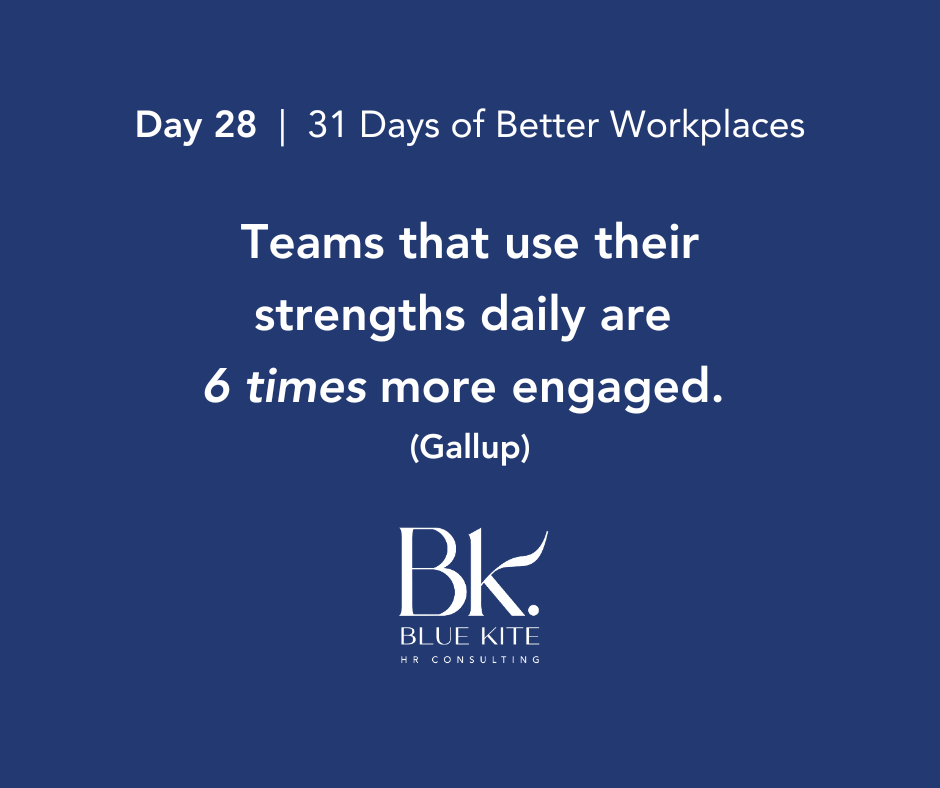
Day 28 of 31 Days of Better Workplaces — today I want to make the case for strengths-based leadership as one of the most evidence-backed and under-utilised approaches in the modern workplace.
And I want to be honest about why it’s still underused: because most leadership systems are built around fixing weaknesses, not amplifying strengths. Performance reviews spend the majority of time on development areas. Coaching conversations default to what’s not working. Improvement plans are, by definition, focused on deficits.
This is understandable. It’s human to notice what’s wrong. But it’s also producing worse outcomes than the alternative.
What the research shows
Gallup’s research — across millions of workers in dozens of countries — has produced a consistent finding: employees who use their strengths every day are six times more engaged than those who don’t. More engaged employees are more productive, have lower absenteeism, deliver better customer outcomes, and stay significantly longer.
The evidence on strengths-based interventions is also compelling in terms of performance improvement. Focusing development conversations on what someone does naturally well and building more opportunities for them to do it more produces measurably better performance outcomes than focusing exclusively on correcting weaknesses.
This does not mean ignoring genuine performance problems — and I want to be clear about that. If someone’s weaknesses are causing real harm to their work or team, those need to be addressed. Strengths-based leadership is not an excuse to avoid difficult conversations.
But it does mean rebalancing. The current default in most performance management systems is heavily deficit-focused — and the research suggests we’ve got the ratio wrong.
What’s emerging in contemporary businesses
Strengths-based hiring: using tools like CliftonStrengths or DiSC (I’m an accredited DiSC facilitator) not just for development but to inform role design and team composition — understanding which combinations of strengths create high-performing teams.
Strengths-based job design: deliberately building roles and assignments that allow individuals to spend more of their time in areas of natural strength, rather than requiring everyone to perform identically across all dimensions.
Strengths-aware leadership conversations: leaders who understand the strengths profile of each team member and use that understanding to assign work, provide feedback, and have development conversations.
What this looks like in practice
Instead of asking “what do you need to improve?” in a performance conversation, also asking “where do you feel most energised at work, and how do we create more of that?”
Instead of designing teams for homogeneity, designing them for complementary strengths — understanding that what looks like “a difficult personality” is often a misapplied strength.
Instead of managing everyone the same way, adjusting how you communicate, delegate, and develop based on what each person naturally brings.
My view
The businesses building strengths-based cultures right now are not doing it because it feels good, although it does. They’re doing it because the data says it works. It produces better performance, better retention, and better wellbeing outcomes simultaneously — and in a tight labour market, that combination is a genuine competitive advantage.
Book your free 30-minute consultation at Blue Kite HR Consulting

Blue Kite specialises in providing
HR services to support businesses
to create better workplaces.