
ARTICLES

Using People Data to Make Better HR Decisions (Without an HR Team)
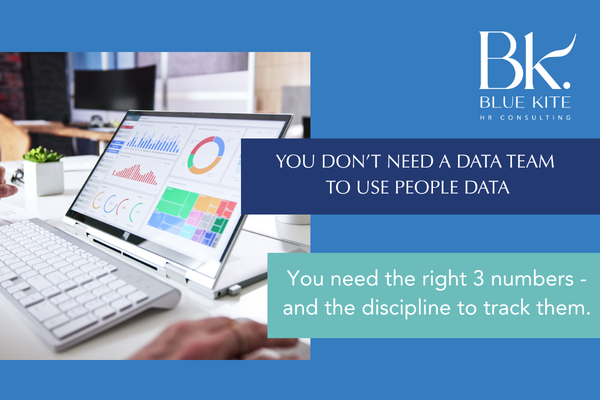
When a business owner was asked why they’d let a particularly strong employee leave without a counteroffer, the answer was: “I didn’t see it coming.” The warning signs were all there — a string of absences, a drop in the quality of work, disengaged responses in team meetings. But they hadn’t been tracked or noticed as a pattern. They were just noise.
One of the most significant shifts in people management over the past decade has been the availability of data to small and medium businesses. The kind of workforce analytics once reserved for large organisations with dedicated HR information systems is now accessible through the tools many businesses already use — payroll software, rostering platforms, performance tracking, even simple spreadsheets.
The challenge isn’t access to data. It’s knowing which data matters, and building the habit of actually using it.
The People Metrics That Predict Problems
Not all HR data is equally useful. Some of the most commercially relevant metrics for SMEs are also the simplest to track.
Turnover rate — the percentage of your workforce that leaves over a given period — is a starting point. But voluntary turnover (people who choose to leave) tells you something different from involuntary turnover (people you asked to leave). Tracking them separately gives you more useful information. Industry benchmarks are available through Fair Work and sector associations, and they’re worth knowing.
Absence rates are an early indicator of disengagement, workload problems, or cultural issues. An individual absence here and there tells you very little. A pattern — particularly in a specific team or following a particular event — tells you something meaningful.
Time-to-fill for vacancies tells you about your attractiveness as an employer and the efficiency of your recruitment process. Time-to-productivity for new hires tells you about the quality of your onboarding. Both have direct commercial implications.
Common Mistakes When Using People Data
The most common mistake is using data retrospectively — looking at it only after a problem has become serious. The value of people data is in its early warning potential, which requires building the habit of reviewing it regularly rather than only in response to a crisis.
The second mistake is using metrics in isolation. High turnover in one team might reflect a management problem, a market factor, or a role design issue. The data tells you there’s a pattern worth investigating; it doesn’t tell you why. Combining data with qualitative information — exit interviews, one-on-ones, team conversations — gives you a much fuller picture.
The third is tracking data without acting on it. Measuring without responding is a waste of time and, when employees notice that feedback or patterns are collected but ignored, it erodes trust.
Getting Started Simply
You don’t need HR software to start using people data effectively. A simple spreadsheet tracking headcount, voluntary departures, average tenure, and absence rates — reviewed quarterly — will surface patterns that are genuinely useful for business decisions. Start small, build the habit, and add complexity only when you have a specific question the current data can’t answer.
Ready to build a better workplace? Book your free 30-minute consultation at Blue Kite HR Consulting

Blue Kite specialises in providing
HR services to support businesses
to create better workplaces.