ARTICLES

Values-Based Hiring: Recruiting for Culture Fit Without Bias
A consulting firm had a problem it couldn’t initially articulate. Their team “gelled” brilliantly, everyone got along well, decisions were made smoothly, and client satisfaction was high. They were also almost completely homogeneous — same educational background, same professional networks, similar life experiences. When the market shifted and clients started expecting more diversity of perspective and approach, the firm found it didn’t have what was needed. The “culture fit” they’d hired for so carefully had quietly become a ceiling.
“Culture fit” is one of the most used and most misunderstood concepts in hiring. Used with intention and rigour, it can help you build a team that shares genuine values and works well together. Used carelessly, it becomes a socially acceptable way to hire people who look, think, and communicate like those who are already there — and to exclude people who don’t.
The Difference Between Values Alignment and Cultural Cloning
The concept worth hiring for isn’t “fit” — it’s values alignment. Do this person’s core professional values — how they treat colleagues, how they handle mistakes, how they approach accountability — align with the values your business actually operates by? That’s a meaningful, relevant question.
“Would they get on well with the team” is not the same question. It tends to be answered based on familiarity, shared references, communication style, and how comfortable the interviewers felt in the conversation. Those factors are influenced heavily by shared backgrounds, and they have very little to do with whether someone will do excellent work.
How to Make It Rigourous
The first step is defining what your values actually mean in practice. “Integrity” is a value most businesses claim. But what does integrity look like in this specific workplace? What behaviours evidence it? What decisions does it inform? Vague values can’t be used to evaluate candidates reliably.
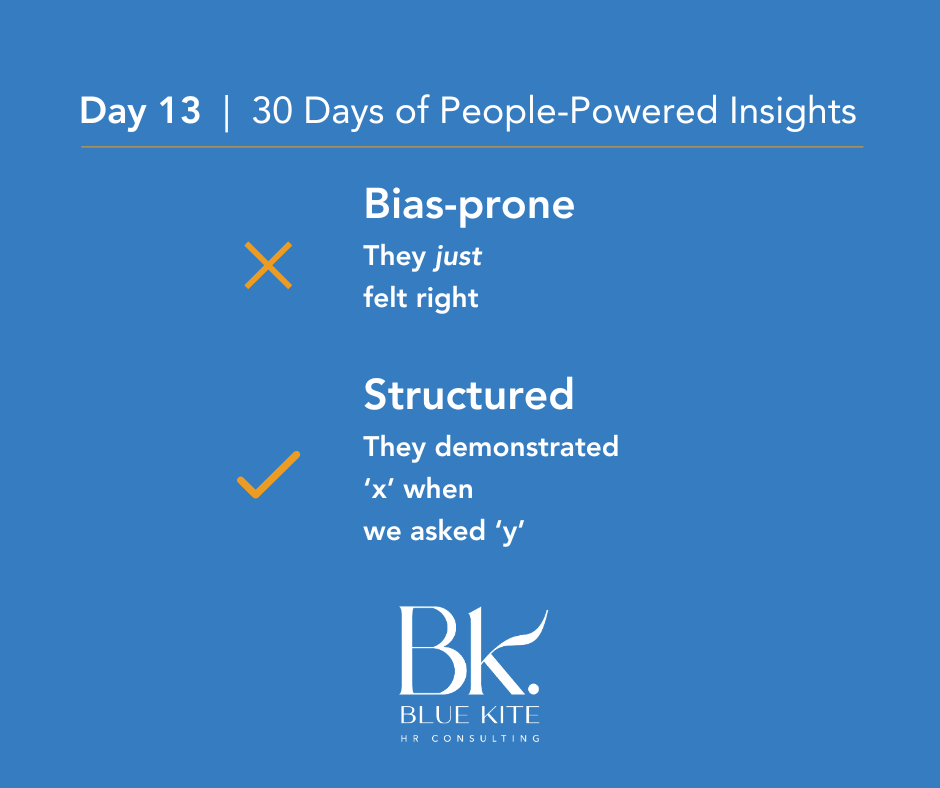
Once you’ve defined values behaviourally, you can write interview questions that actually test for them. Behavioural interview techniques — “tell me about a time when…” structured questions — are significantly more predictive than gut-feel responses to general conversation. They also produce more comparable data across candidates.
Structure your process consistently. When every candidate is asked different questions based on where the conversation goes, you’re not comparing apples with apples. A structured scorecard — where everyone evaluating a candidate rates the same dimensions against the same criteria — dramatically reduces the influence of bias.
Involve diverse decision-makers. A hiring decision made by a single person or a homogeneous group will always tend towards replication. Multiple perspectives in the assessment process improve both the quality of the decision and its defensibility.
The Business Case For Getting It Right
Genuinely values-aligned hires tend to stay longer, integrate more effectively, and contribute to the culture in the ways that matter. The goal isn’t a team that agrees on everything — it’s a team that shares a foundation of how to work, treat people, and operate with integrity, while bringing genuinely different experiences, perspectives, and approaches to the actual work.
Ready to build a better workplace? Book your free 30-minute consultation at Blue Kite HR Consulting
Blue Kite specialises in providing
HR services to support businesses
to create better workplaces.