
ARTICLES

HR as a Strategic Function: Moving Beyond Administration
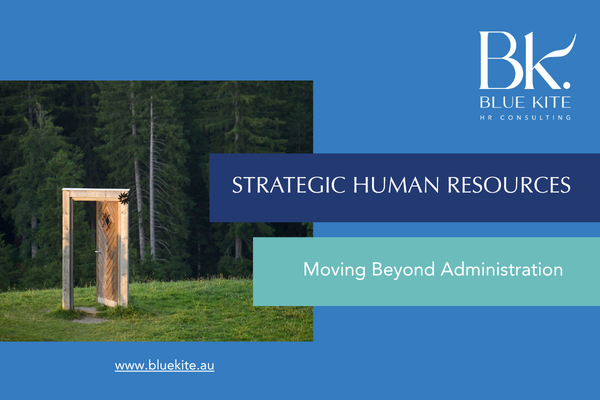
In many businesses, HR is still viewed primarily as an administrative function—responsible for contracts, policies, compliance and employee relations.
While these areas remain important, they represent only part of HR’s potential value. Increasingly, HR is being recognised as a strategic function that directly influences business performance.
A strategic HR approach focuses on aligning people practices with business objectives. It considers how leadership capability, workforce structure, culture and employee experience contribute to organisational outcomes. This requires HR to move beyond transactional tasks and engage more actively in decision-making at a senior level.
For example, decisions about growth, restructuring or transformation all have significant people implications. Without strong HR input, organisations risk overlooking critical factors such as capability gaps, leadership readiness and cultural impact.
To operate strategically, HR teams need both commercial understanding and practical insight into how work gets done. They must be able to translate business goals into clear people strategies—whether that involves developing leaders, improving performance management or strengthening engagement.
Importantly, this shift is not solely the responsibility of HR. Leaders across the organisation must also recognise the value of effective people practices and engage with HR as a partner, not just a support function.
When HR operates strategically, it contributes to better decision-making, stronger leadership and more consistent performance. In a competitive environment, this can be a significant differentiator.
Get on the waitlist for my Blue Kite HR Advisory Portal, here.

Blue Kite specialises in providing
HR services to support businesses
to create better workplaces.