ARTICLES

Succession Planning: Why Businesses Leave It Too Late
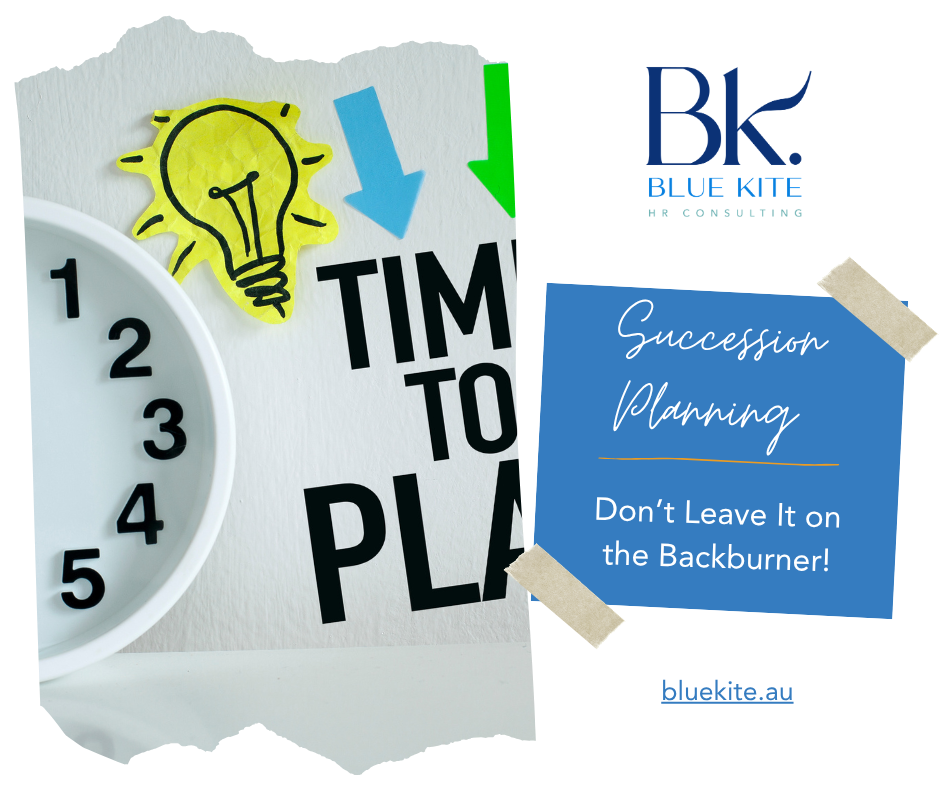
Day 12 of 31 Days of Better Workplaces — succession planning is something most business owners know they should be doing. Most of them aren’t.
The conversation usually goes one of two ways. Either the business owner thinks succession planning is only for large corporations, or they plan to “deal with it when the time comes.” Both positions create significant risk.
What succession planning actually is for a business
It’s not a corporate exercise involving lengthy documentation and committee reviews. For a business, succession planning is about understanding which roles are critical to the business continuing to function, identifying the risks if those roles suddenly became vacant, and having a plan, even a simple one, for what happens if they do.
The most common risk most businesses carry
Key person dependency. One person, often the owner, or a long-tenured operations manager, or the one person who “knows how everything works”, holds knowledge, relationships, and capability that exists nowhere else in the business. When they leave — and eventually they will — the disruption can be significant.
Three things to do this week
First
Identify your critical roles. Not just seniority, actual criticality. Which positions, if they became vacant tomorrow with no notice, would cause the most operational damage?
Second
Assess your bench. For each critical role, is there anyone in the business who could step into it, even partially? What would it take to get them ready? That gap analysis is the starting point for your succession plan.
Third
Capture critical knowledge. Start a simple process of documentation, key contacts, processes, passwords, client relationships for your highest-risk roles. This alone reduces the impact of an unexpected departure significantly.
The thing no one says out loud
Succession planning also applies to the owner. If something happened to you tomorrow, what would happen to your business? Your team? Your clients? A succession plan is also a contingency plan, and it’s one of the most responsible things you can build.
Book a free 30-minute consultation at Blue Kite HR Consulting
Blue Kite specialises in providing
HR services to support businesses
to create better workplaces.