
• Skip to primary navigation
  • Skip to main content

BlueKite HR

  • HOME
  • ABOUT US
  • HR SERVICES
  • COACH WITH ME
  • HEALTH & WELLBEING
  • MEDIA/PR
    • – Articles/Blogs
    • – Keynote Speaking Events
    • – Podcast Interviews
    • – Ticker Interviews
  • BLOG
  • RESOURCES
  • CONTACT

Succession Management

16 August, 2026 by Catie Paterson Leave a Comment

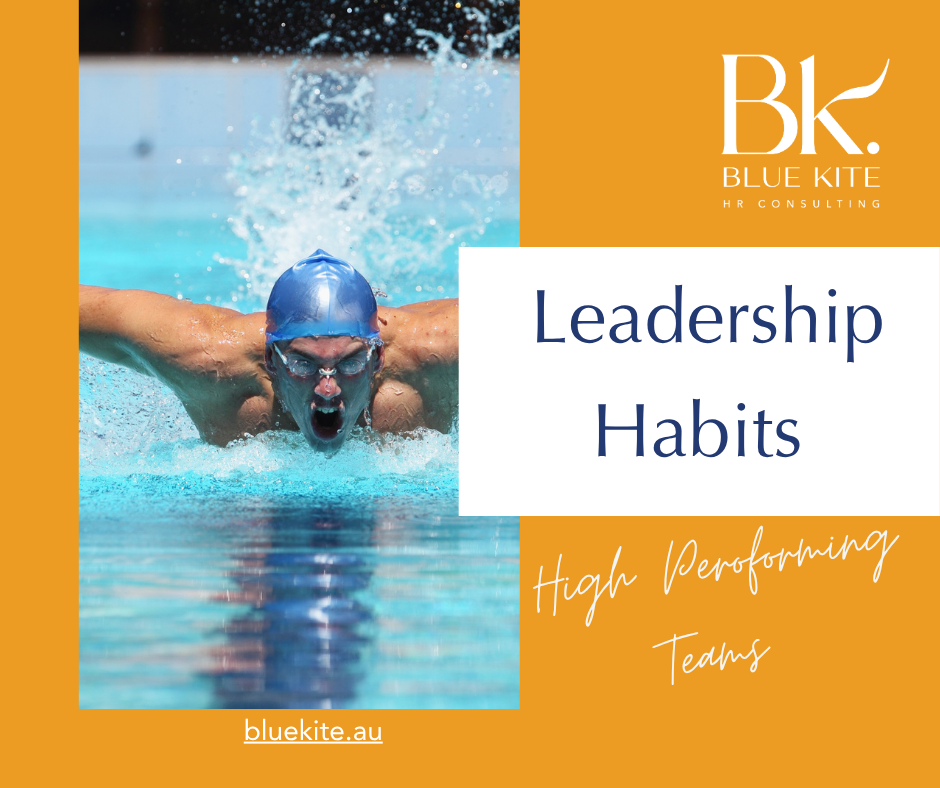
5 Leadership Habits That Build High-Performing Teams

ARTICLES

5 Leadership Habits That Build High-Performing Teams
16 August, 2026
Filed Under: Advisory and compliance, Business Update, Culture, HR essentials, Leadership, Succession Management, Workforce, Workforce Planning

Day 16 of 31 Days of Better Workplaces — high performance doesn’t happen by accident. It’s the result of consistent behaviours that leaders either build deliberately or don’t.

After more than twenty years working with leaders across industries, these are the five habits I see most consistently in the leaders who build genuinely high-performing teams.


Habit 1: They communicate context, not just tasks

High-performing team members want to understand why — why this work matters, how it connects to the bigger picture, what success looks like. The manager who only assigns tasks produces a team that executes instructions. The manager who shares context produces a team that thinks.


Habit 2: They give feedback continuously, not annually

Waiting for a formal review process to tell someone they’re doing well — or not — is a missed opportunity. Brief, specific, real-time feedback — “that was a great way to handle that client” or “I noticed this in your report, here’s what I’d suggest” — compounds over time into a team that knows where they stand and how to improve.


Habit 3: They invest in individual development

High-performing leaders know what each person on their team is working toward — professionally and personally. They look for opportunities to stretch people, give them new experiences, and connect their day-to-day work to their longer-term goals. People perform better when they can see they’re growing.


Habit 4: They protect the team’s capacity

Good leaders push back on unrealistic workloads, prioritise ruthlessly, and don’t allow their team to be pulled in twenty directions at once. They understand that sustained high performance requires sustainable conditions — and they advocate for those conditions.


Habit 5: They model the culture they wantgreement clauses that help manage workplace risk

Whatever you want your team to do, you have to do first. If you want them to be honest, be honest. If you want them to take ownership, take ownership. If you want them to prioritise wellbeing, model it. Culture is not what you mandate — it’s what you demonstrate.
The good news: these are all learnable habits. None of them require a special talent. They require intention and consistency.


Book a free 30-minute consultation at  Blue Kite HR Consulting 
 

BACK TO ALL ARTICLES
Screenshot 2025-11-18 164639

+61 (0) 409 545 634

cpaterson@bluekite.au

FREE CONSULTATION

  • ABOUT
  • HR SERVICES
  • COACH WITH ME
  • HEALTH & WELLBEING
  • MEDIA/PR
  • ARTICLES/BLOG
  • RESOURCES
  • CONTACT
  • PRIVACY

Blue Kite specialises in providing
HR services to support businesses
to create better workplaces.
Filed Under: Advisory and compliance, Business Update, Culture, HR essentials, Leadership, Succession Management, Workforce, Workforce Planning

12 August, 2026 by Bronwyn Coulthart Leave a Comment

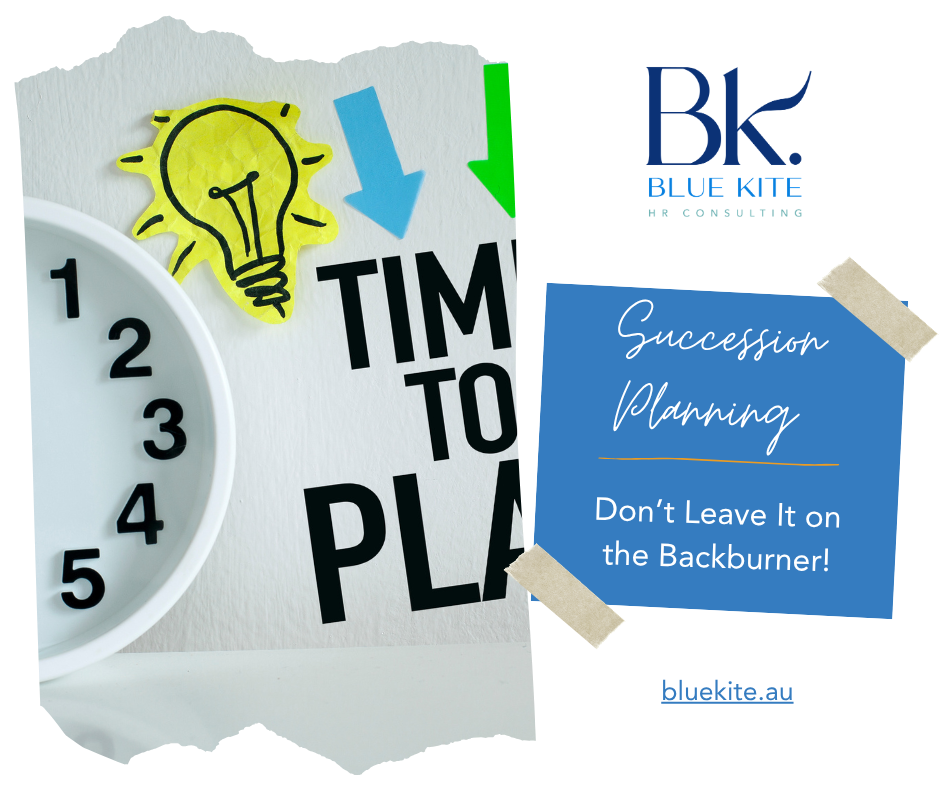
Succession Planning: Why Businesses Leave It Too Late

ARTICLES

Succession Planning: Why Businesses Leave It Too Late

12 August, 2026
Filed Under: Advisory and compliance, Business Update, Career Planning, Change management, Culture, External HR Support, HR essentials, Leadership, Succession Management, Workforce, Workforce Planning

Day 12 of 31 Days of Better Workplaces — succession planning is something most business owners know they should be doing. Most of them aren’t.

The conversation usually goes one of two ways. Either the business owner thinks succession planning is only for large corporations, or they plan to “deal with it when the time comes.” Both positions create significant risk.


What succession planning actually is for a business

It’s not a corporate exercise involving lengthy documentation and committee reviews. For a business, succession planning is about understanding which roles are critical to the business continuing to function, identifying the risks if those roles suddenly became vacant, and having a plan, even a simple one, for what happens if they do.


The most common risk most businesses carry

Key person dependency. One person,  often the owner, or a long-tenured operations manager, or the one person who “knows how everything works”, holds knowledge, relationships, and capability that exists nowhere else in the business. When they leave — and eventually they will — the disruption can be significant.


Three things to do this week 

First

Identify your critical roles. Not just seniority, actual criticality. Which positions, if they became vacant tomorrow with no notice, would cause the most operational damage?

Second

Assess your bench. For each critical role, is there anyone in the business who could step into it, even partially? What would it take to get them ready? That gap analysis is the starting point for your succession plan.

Third

Capture critical knowledge. Start a simple process of documentation, key contacts, processes, passwords, client relationships for your highest-risk roles. This alone reduces the impact of an unexpected departure significantly.


The thing no one says out loud

Succession planning also applies to the owner. If something happened to you tomorrow, what would happen to your business? Your team? Your clients? A succession plan is also a contingency plan, and it’s one of the most responsible things you can build.

Book a free 30-minute consultation at Blue Kite HR Consulting 

BACK TO ALL ARTICLES
Screenshot 2025-11-18 164639

+61 (0) 409 545 634

cpaterson@bluekite.au

FREE CONSULTATION

  • ABOUT
  • HR SERVICES
  • COACH WITH ME
  • HEALTH & WELLBEING
  • MEDIA/PR
  • ARTICLES/BLOG
  • RESOURCES
  • CONTACT
  • PRIVACY

Blue Kite specialises in providing
HR services to support businesses
to create better workplaces.
Filed Under: Advisory and compliance, Business Update, Career Planning, Change management, Culture, External HR Support, HR essentials, Leadership, Succession Management, Workforce, Workforce Planning

4 August, 2026 by Bronwyn Coulthart Leave a Comment

Performance Management: 5 Steps Every Business Needs

ARTICLES

Performance Management: 5 Steps Every Business Needs

4 August, 2026
Filed Under: Business Update, Career Planning, Change management, Culture, External HR Support, HR essentials, Leadership, Media Appearances, Succession Management, Workforce

Performance management is the topic most managers dread. But when it’s done right, it’s one of the most powerful tools you have. 


The goal of performance management isn’t to build a paper trail for termination. It’s to help people do their best work and to address problems early, before they become serious. Most  businesses either avoid it entirely — hoping problems resolve themselves — or jump to formal processes too late.
Here’s a straightforward five-step framework:


Step 1. Be clear about expectations from the start 

You cannot manage performance against expectations that were never clearly communicated. Every role needs clear KPIs, responsibilities, and standards. If yours don’t have them, that’s your starting point.


Step 2. Have regular one-on-ones

Performance issues rarely emerge overnight. They develop over time — and regular check-ins allow you to catch early signs, give real-time feedback, and maintain the relationship that makes difficult conversations easier.


Step 3. Address issues early and informally 

When you notice a performance concern, address it quickly and informally first. A brief, direct conversation — “I’ve noticed this, I want to understand what’s happening” — is far more effective than letting it build until a formal process is required.


Step 4. Document what matters 

If a performance issue is ongoing, start keeping brief notes. Date, what was observed, what was discussed, what was agreed. This isn’t about catching someone out — it’s about creating a clear record that protects both of you.


Step 5. Move to a formal process when informal hasn’t worked

A formal performance improvement plan (PIP) should be used when informal conversations haven’t produced improvement. It should be clear, time-bound, specific, and — critically — include genuine support for the person to succeed.
The Fair Work Act has specific requirements around procedural fairness. Get the process right, and you protect the business. Get it wrong, and a


Book a free 30-minute consultation at bluekite.au

BACK TO ALL ARTICLES
Screenshot 2025-11-18 164639

+61 (0) 409 545 634

cpaterson@bluekite.au

FREE CONSULTATION

  • ABOUT
  • HR SERVICES
  • COACH WITH ME
  • HEALTH & WELLBEING
  • MEDIA/PR
  • ARTICLES/BLOG
  • RESOURCES
  • CONTACT
  • PRIVACY

Blue Kite specialises in providing
HR services to support businesses
to create better workplaces.

Filed Under: Business Update, Career Planning, Change management, Culture, External HR Support, HR essentials, Leadership, Media Appearances, Succession Management, Workforce

22 June, 2026 by Bronwyn Coulthart Leave a Comment

Future Skills for Leaders

ARTICLES

Future Skills for Leaders

22 June, 2026
Filed Under: Advisory and compliance, Business Update, Career Planning, Change management, Culture, HR essentials, Leadership, Life Experiences, Succession Management, Workforce, Workforce Planning

Leadership capability is evolving in response to changing workplace dynamics. While technical expertise remains important, it is no longer sufficient on its own. Leaders are increasingly required to navigate complexity, manage diverse teams and respond to ongoing change.

Skills such as emotional intelligence, adaptability and communication are becoming central to effective leadership. These capabilities support stronger relationships, clearer decision-making and more effective team management.

Emotional intelligence enables leaders to understand and respond to the needs of their team, manage their own reactions and approach challenges with greater awareness. Adaptability supports leaders in adjusting to changing circumstances and maintaining focus in uncertain environments.

Communication is equally important. Clear, consistent communication helps align teams, set expectations and reduce ambiguity.

Developing these skills requires deliberate effort. Organisations may support this through leadership development programs, coaching and ongoing feedback.

The leaders who are most effective in modern workplaces are those who can combine technical capability with strong interpersonal skills. This balance supports both performance and culture.

As workplaces continue to evolve, leadership development must evolve alongside them. Focusing on the right skills is essential for long-term success.

Get on the waitlist for my Blue Kite HR Advisory Portal, here.

BACK TO ALL ARTICLES
Screenshot 2025-11-18 164639

+61 (0) 409 545 634

cpaterson@bluekite.au

FREE CONSULTATION

  • ABOUT
  • HR SERVICES
  • COACH WITH ME
  • HEALTH & WELLBEING
  • MEDIA/PR
  • ARTICLES/BLOG
  • RESOURCES
  • CONTACT
  • PRIVACY

Blue Kite specialises in providing
HR services to support businesses
to create better workplaces.

Filed Under: Advisory and compliance, Business Update, Career Planning, Change management, Culture, HR essentials, Leadership, Life Experiences, Succession Management, Workforce, Workforce Planning

21 March, 2019 by Bronwyn Coulthart Leave a Comment

The Importance of Career Planning & Succession Management Within the Workplace: Part 2

ARTICLES

The Importance of Career Planning & Succession Management Within the Workplace: Part 2

21 March, 2019
Filed Under: Career Planning, Change management, Succession Management

In Part 1 of this topic I introduced the concept of succession management and the importance of career planning when it comes to retaining your employees and creating a culture of growth. In Part 2 we’ll dive deeper into the individual needs of your employees and how communication is central to the success of your ongoing succession plan.

Effective succession planning goes beyond a one-time event; it’s important to plan with your team and encourage the continual development of your staff through mentoring, regular check-ins, goal setting and strategic evaluation over time. Career plans are no longer static, and as companies continue to downsize and flatten, traditional career ladders are becoming less prevalent. Instead, helping your employees seek opportunities to grow and having authentic, timely conversations about their personal and professional goals can have a huge influence on how engaged they are, their perception of where or how they work, and how supported they feel on their professional journey.

Particularly when managing a multi-generational workforce, each of these different demographics has varying needs, wants and expectations. Baby boomers, for example, might have typically enjoyed decade-long careers while millennials will seek multiple jobs throughout their lifetime. With this in mind, succession planning then isn’t just about finding the right talent, but also dealing with high rates of turnover within younger generations. Yet in the race to replace older generations and retain the millennials, it’s important you don’t forget about Gen X. This demographic is often next in line to step into leadership roles as older generations move into retirement, but if they’re continually looked over in favour of millennials or sense a ‘grey ceiling’ looming above them, they might leave to follow their career dreams elsewhere.

Once stripped back, the common thread is all about communication. Communicating and planning across the board is essential, not only regarding succession management but planning for growth and being prepared for successions when they arrive. Staying ahead of the curve by understanding each employee’s individual growth trajectory and communicating openly with your team has long-lasting results; effective leadership means less about ruling from the top, and more about identifying if the people who work beneath you are growing and developing.

It’s important to really know your team; we’re all humans after all – each with varying aspirations, attitudes, skills, goals and dreams – and it’s human nature to want to grow, whether that’s learning a new skill to advance your career, embracing new responsibilities, or exploring ways to find happiness and challenges in your day-today that might simultaneously help your company too.

Communication is imperative and working with your team to plan for and execute an effective growth strategy requires the right tools to do so. Inspired by my passion for strategising and deep interest in culture and career development, I’m excited to announce that I’ve recently finished working on a customised business planning system that’s finally ready to launch in the market. It’s been built using years of industry knowledge and experience, drawing upon case studies and fervent analysis of the ins and outs of career planning and succession management.

If you’re looking to adopt an innovative and cost-effective approach in the new financial year, I’d love to hear from you.

BACK TO ALL ARTICLES
Screenshot 2025-11-18 164639

+61 (0) 409 545 634

cpaterson@bluekite.au

FREE CONSULTATION

  • ABOUT
  • HR SERVICES
  • COACH WITH ME
  • HEALTH & WELLBEING
  • MEDIA/PR
  • ARTICLES/BLOG
  • RESOURCES
  • CONTACT
  • PRIVACY

Blue Kite specialises in providing
HR services to support businesses
to create better workplaces.

Filed Under: Career Planning, Change management, Succession Management Tagged With: blog, bluekite, business planning, catie paterson, catie paterson consulting, consulting, hr, hr consulting, hr industry, hr support, hr tips, human resources, melbourne business, melbourne hr, melbourne hr consultant, succession management, tips, top tips

Copyright © 2026 · Executive Pro on Genesis Framework · WordPress · Log in koopo

  • HOME
  • ABOUT US
  • HR SERVICES
  • COACH WITH ME
  • HEALTH & WELLBEING
  • MEDIA/PR
    • – Articles/Blogs
    • – Keynote Speaking Events
    • – Podcast Interviews
    • – Ticker Interviews
  • BLOG
  • RESOURCES
  • CONTACT