
• Skip to primary navigation
  • Skip to main content

Bronwyn Coulthart Site

  • HOME
  • ABOUT US
  • HR SERVICES
  • COACH WITH ME
  • HEALTH & WELLBEING
  • MEDIA/PR
    • – Articles Written
    • – Keynote Speaker
    • – Podcast Interviews
    • – Ticker Interviews
  • ARTICLES/BLOG
  • RESOURCES
  • CONTACT

hr consulting

April 8, 2021 by Bronwyn Coulthart Leave a Comment

Case Study: Managing an unfair dismissal as a result of COVID-19 slowdown

ARTICLES

Case Study: Managing an unfair dismissal as a result of COVID-19 slowdown

April 8, 2021
Filed Under: Advisory and compliance

Businesses are always having to adapt to changes from the economic and social environment, technological advancements and their customer’s needs. Many of these changes can be planned for and implemented when the business is ready. The pandemic changed a lot of these plans and some businesses were forced to pivot their operations and priorities or even temporarily close, no more so then in the building industry.

Significant events like COVID-19, have impacts on employee roles, responsibilities and conditions, however, at the same time, it hasn’t changed employer obligations no matter the severity of business issues.

In a recent case, a client in the building industry had an employee file an unfair dismissal claim citing constructive dismissal and redundancy. Due to the complexity of the dispute and changes to the business as a result of COVID-19 at that point in time, Catie Paterson HR Business Consulting was brought in to manage the unfair dismissal case to help the employer and employee resolve the dispute that was both fair and reasonable for both parties.

The lead up to the dispute

The employer owns and operates two business entities in the building industry. Before taking twelve months maternity leave the employee was engaged in a role, working three days per week and no weekends. When the employee was due to return to work from maternity leave, COVID-19 restrictions meant some of the builder’s operations were closed. There was a decline in sales which resulted in the employee not being able to return to their previous role.

The employer offered the employee an alternate role in their other ‘business entity’ for a period of four to six months until sales increased. The role offered was similar in status and the pay remained that same as the previous role with the other business entity. The hours of work would this time include working one weekend day.

The employee did not agree that the alternate role was of similar status and requested a further six-month extension of maternity leave in order to return to the original role. The employer did not agree to the maternity leave extension but agreed to the employee working three days per week and no weekends. The employee did not accept this and resigned from her role and filed an unfair dismissal citing constructive dismissal and redundancy.

The approach to the Unfair Dismissal Conciliation

According to Fair Work, a constructive dismissal is a forced resignation, meaning an employee has no real choice but to resign. A genuine redundancy is when an “employer no longer required the person’s job to be performed by anyone because of changes in the operational requirements of the employer’s enterprise.”

Catie Paterson HR Business Consulting approached the dispute by first reviewing and understanding the facts of the case by utilising prior knowledge and experience from other similar disputes, to determine if it was constructive dismissal and a genuine redundancy. With this concise process of review and consultation, Catie Paterson HR Business Consulting were able to gather the necessary documentation to justify the decisions that were made and that procedures were followed in compliance with Fair Work. This meant the client was well prepared for the unfair dismissal conciliation with the Fair Work Commission (FWC) and an agreed settlement could be reached, avoiding a full FWC hearing or conference.

The Result

During the conciliation it was found the situation was not constructive dismissal as the employee resigned on their own accord as a result of not wanting to accept/work in the alternate role offered with the other business entity. It was deemed that the employer did offer flexibility with changing the roster to working three days per week and no weekends.  Also, the original role was not made redundant as the employer required someone in the role for the future and within six months.

The importance of Human Resources (HR) policies, procedures and documentation

FWC conciliations and hearings can be very stressful for all parties involved and can be a very long, drawn out process if procedures, documentation and consultation requirements are not followed or complied with. As this case demonstrates it’s important to have workplace policies and procedures in place to help manage legal risk, provide that support framework for when decisions need to be made and required documentation.

It also shows how the complexity of the pandemic can affect a business and their employee’s roles, responsibilities and conditions but employer obligations still remain the same as before the pandemic.

Businesses going through significant changes should seek guidance from a Human Resources Consultant on any decisions that need to be made around their workforce to hopefully avoid FWC conciliations and hearings.
BACK TO ALL ARTICLES
Screenshot 2025-11-18 164639

+61 (0) 409 545 634

cpaterson@bluekite.au

FREE CONSULTATION

  • ABOUT
  • HR SERVICES
  • COACH WITH ME
  • HEALTH & WELLBEING
  • MEDIA/PR
  • ARTICLES/BLOG
  • RESOURCES
  • CONTACT

Blue Kite specialises in providing
HR services to support businesses
to create better workplaces.

Filed Under: Advisory and compliance Tagged With: blog, bluekite, catie paterson business consulting, compliance, hr, hr advisory, hr consulting, hr industry, human resources

September 1, 2020 by Bronwyn Coulthart Leave a Comment

Three reasons every business needs a successful onboarding process

ARTICLES

Three reasons every business needs a successful onboarding process

September 1, 2020
Filed Under: Onboarding

If you have ever had to hire new staff you know how much time and money it can take to find the right person for the job. This is only part of the process. Once you have found that right person you want them to stay for the long term and not up and leave after a few months. It’s estimated that replacing a staff member can cost 3 or 4 times their annual salary.

Many businesses underestimate the importance of integrating and training their new starters from day one as well as creating a successful employee experience. The necessity of the administrative parts of the process when a new employee starts often takes centre stage. More important than ever is the concept of having the employee at the centre of everything you do and this starts with onboarding.

What is onboarding?

Onboarding is a formal process for integrating a new employee into the business – their role, their team, business operations and culture. A good onboarding process can help your new starter get up to speed quickly, alleviate uncertainty and any concerns, boosting their confidence and productivity from the start. An onboarding process will start before their first day and continue to their twelve-month anniversary and sometimes beyond.

Frighteningly, 40% of organisations rate their onboarding programs as less than moderately effective. On the flip side, companies with structured and standardised onboarding processes experience 54% higher productivity from their new staff, and twice as much engagement.

Why is onboarding so important?

Onboarding is the critical point for making your new starter feel valued, part of the team and setting expectations from day one. It bridges the gap between the candidate and employee experience and helps manage the social and emotional fears your new starter may have when starting a new job.

Three of the biggest benefits a good onboarding process can have is the increase in retention, productivity and employee satisfaction. An effective onboarding program can increase retention by 25% and improve employee performance by 11%.

– Retaining your people

It has been reported that an average person will now hold almost 12 jobs before the age of 50. This means it can be harder for businesses to retain good talent. A way is making sure your employees are engaged from the very start. Onboarding helps your new starter understand your culture and core values and develop key interpersonal relationships to kick start engagement from their very first day. Businesses with highly engaged workforces are generally 21% more profitable than those with poor engagement.

– Increase in productivity

An effective onboarding process will increase their productivity level faster and have them ‘up to speed’ with others in their team in less time. A solid onboarding process will include training the new starter in not only their job role and what is expected of them but also how their role aligns with the overall business and its values. This will in turn increase their engagement and motivation for staying on for the long term.

– Increase in employee satisfaction

More important than ever is the concept of having the employee at the centre of everything you do and this starts with onboarding. The old way of induction was very business compliance – paperwork, forms etc. A good onboarding process is built around the new starter experience which includes compliance but is not the focus. An employee centric approach allows you to take the time to learn and get to know the individual and develop that all-important relationship. If they feel valued and understood this will result in an increase in employee satisfaction and a smooth transition.

The onboarding experience is the critical opportunity for setting expectations on how their experience will be with you but also has the added benefits of increasing retention, productivity and satisfaction. First impressions count, so take the time to plan an effective onboarding process. With so many aspects of modern-day workforce management changing to more flexible models of operation, creating certainty for your new starters has never been more important.

BACK TO ALL ARTICLES
Screenshot 2025-11-18 164639

+61 (0) 409 545 634

cpaterson@bluekite.au

FREE CONSULTATION

  • ABOUT
  • HR SERVICES
  • COACH WITH ME
  • HEALTH & WELLBEING
  • MEDIA/PR
  • ARTICLES/BLOG
  • RESOURCES
  • CONTACT

Blue Kite specialises in providing
HR services to support businesses
to create better workplaces.
Filed Under: Onboarding Tagged With: blog, business planning, catie paterson consulting, hr, hr consulting, hr industry, human resources, new employees, onboarding

August 26, 2020 by Bronwyn Coulthart Leave a Comment

Media: Interview for the Dynamic Leader podcast on empowerment and accountability

ARTICLES

Media: Interview for the Dynamic Leader podcast on empowerment and accountability

August 26, 2020
Filed Under: Leadership, Media Appearances

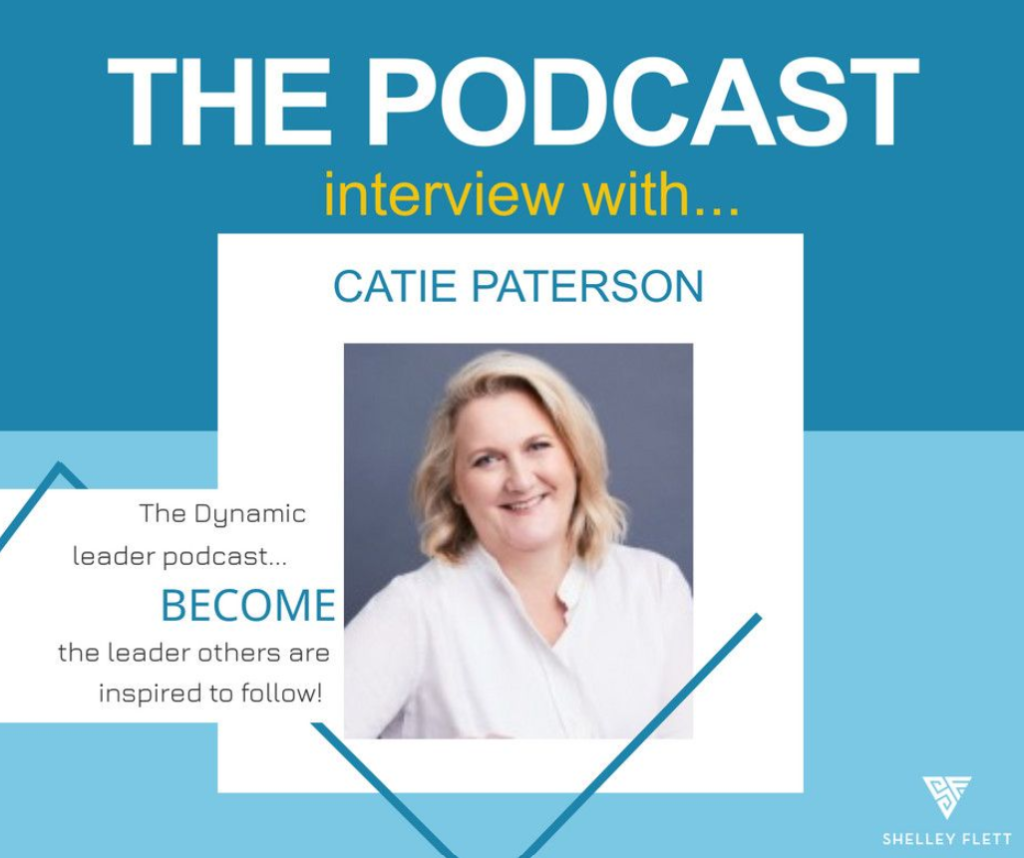
Catie Paterson was a special guest on Shelley Flett’s ‘The Dynamic Leader’ podcast episode #31. Shelley Flett is a well-respected leadership trainer and coach, working with leaders to build high performing and efficient teams.

Passionate about supporting the next generation of leaders, Shelley has recently written a book ‘The Dynamic Leader’ which includes a model for leaders to find their own dynamic leadership style and what her podcast is focused around.

In the episode Catie and Shelley discuss two essential skills a great leader needs; empowerment and accountability. An empowered leader must feel and have control in their role so they can empower and build confidence in others around them to achieve the desired outcome. At the same time, leaders must be accountable for what they say and follow through with action.

How do you empower your team members to grow?

Thank you to Shelley Flett for having me on the podcast.

To listen to Catie’s episode on the ‘The Dynamic Leader’ podcast, click the link below.

https://bit.ly/3ljsHac

BACK TO ALL ARTICLES
Screenshot 2025-11-18 164639

+61 (0) 409 545 634

cpaterson@bluekite.au

FREE CONSULTATION

  • ABOUT
  • HR SERVICES
  • COACH WITH ME
  • HEALTH & WELLBEING
  • MEDIA/PR
  • ARTICLES/BLOG
  • RESOURCES
  • CONTACT

Blue Kite specialises in providing
HR services to support businesses
to create better workplaces.

Filed Under: Leadership, Media Appearances Tagged With: blog, bluekite, business planning, catie paterson consulting, hr, hr consulting, hr industry, human resources, leadership skills, podcast

June 17, 2020 by Bronwyn Coulthart Leave a Comment

Three tips for boosting productivity and reconnecting your team no matter the environment

ARTICLES

Three tips for boosting productivity and reconnecting your team no matter the environment

June 17, 2020
Filed Under: Leadership

As restrictions start to ease and many businesses begin thinking about how their staff may return to the office, for some people working from home may not end when the COVID-19 pandemic does.

Following recent conversations I’ve had with my clients, one thing that has been discussed a lot has been around productivity. Some businesses have seen significant increase in productivity when it comes to new working environments while for others technological challenges, lack of communication and routine, stress and uncertainty has led to reduction.

It’s important to remember that during these times of uncertainty and change everyone reacts differently and not one day can be the same. For many leaders, this can mean a new way of working or even thinking a little differently to get the most out of your team on a regular basis.

Here are three tips that might help your team to stay focused and boost productivity no matter the environment.

— Focus on your long-term plans 

Over the last few months businesses and staff have been focusing on what impact situations like COVID-19 have on the short-term. When really, it’s important we shift that mindset and get people thinking about what the future looks like, where they sit and what role they will play. When employees feel a sense of purpose and feel part of a journey, they are more likely to be engaged and be in a more positive frame of mind.

— Re-connect your team 

For some teams, the dynamics might seem a little smaller or they may not have connected with each other for a long period of time. This could mean that your employees may have lost touch with each other or even what each other are working on, which can have an affect both personally and professionally.

During these times, it’s important that teams communicate on a regular basis and don’t just focus on work. People need to re-connect and start to feel part of a wider team again, no matter the size.

For example, you might want to implement a simple weekly stand up (virtual) meeting where each person talks about one thing they’re working on and one thing they did on the weekend.

— Have you set clear goals with realistic expectations?

Over the last few months people’s expectations both from a manager’s and employees’ perspective have most likely shifted to accommodate different challenges around personal life, work life balance, home schooling etc.

As restrictions shift and kids start returning to school it’s a good opportunity to re-assess your expectations with your staff and set clear goals to help them engage and refocus their efforts, as well as understanding what you need from them.

Just remember that not everything needs to change. Yes, you might start returning to the office soon or increasing your hours back to normal but don’t forget that during these last few months your business and your people will have adapted to new ways of working that might just be for the better.

Embrace them and be willing to continue to change and adapt as we’re still not sure how long this pandemic will last for or whether we’re at the end. 

BACK TO ALL ARTICLES
Screenshot 2025-11-18 164639

+61 (0) 409 545 634

cpaterson@bluekite.au

FREE CONSULTATION

  • ABOUT
  • HR SERVICES
  • COACH WITH ME
  • HEALTH & WELLBEING
  • MEDIA/PR
  • ARTICLES/BLOG
  • RESOURCES
  • CONTACT

Blue Kite specialises in providing
HR services to support businesses
to create better workplaces.

Filed Under: Leadership Tagged With: blog, bluekite, business planning, catie paterson consulting, consulting, hr, hr consulting, hr industry, human resources

June 4, 2020 by Bronwyn Coulthart Leave a Comment

Essential leadership skills for the office environment

ARTICLES

Essential leadership skills for the office environment

June 4, 2020
Filed Under: Leadership

Leadership is an essential skill that is critical in many aspects in life, from a Chief Executive Officer (CEO) or founder of a company, a project leader on a building site, an office manager, president of your local football club or on the board of your industry association.

No matter what role you are in, a good leader is one that brings about positive change, has a growth mind set to really make a difference and has the ability to inspire others to achieve the vision and goals.

What is leadership?

Many people think of leadership as the title someone has such as the Managing Director of their company or their ‘Team leader,’ but leadership is more than just a title.

Leadership is an important interpersonal skill and the ability of someone to be able to positively influence others and direct them towards achievement of shared goals.

A strong leader is able to engage their people to maximise their people’s potential to be better, communicate effectively, regularly solicit feedback and new ideas and have the ability to problem solve and react quickly to the changing environment.

Leadership versus Management 

Although leadership is an important part of a manager’s role there is a significant difference between ‘leadership’ and ‘management.’ Management deals more with the administrative aspects of planning, organising, budgeting and making sure day to day tasks are being completed to achieve the business goals.

Leadership creates the vision and goals, persuades and motivates people to believe in the vision and to strive to achieve the goals. Leadership often will be involved in decisions on large scale transformations or changes such as entering a new product into a market or a merger or takeover, whereas, managers will plan and set up the business processes to enable successful transformations.

There is a difference between leadership and management but both are complementary skills and effective leaders need to be able to both lead and manage.

Core leadership skills are important when leading a team of people in an office environment.

Essential Skills for a leader in an office environment 

Strong leadership skills are valuable in today’s ever-changing environment.

Becoming a good leader doesn’t happen overnight and can take many years of experience, coaching and working with a mentor to hone these skills.  As we come through the other side of the pandemic, leaders are starting to plan to bring their people back to the office.

Here are some core leadership skills that are important when leading a team of people in an office environment.

— Being positive 

A positive attitude, the way you conduct and present yourself around the office will have an effect on what is expected of the team. Teams look up to the way their leaders act and conduct themselves in specific situations. A positive attitude and the ability to have a ‘laugh’ when something doesn’t quite go to plan or simple acts of acknowledging your people when you first come into the office, asking how they are or about their holiday plans can provide a happy work environment which keeps your people motivated and likely to put in the extra hours when required.  Being caring, friendly, empathetic and encouraging, can go a long way to developing a positive culture and rapport with your people.

— Communication

Being able to clearly articulate what you want to achieve, from your vision, values and goals to developing positive relationships with your peers and staff and concise explanations on specific tasks, communication is one of the most important skills of a leader. Leaders are required to use all forms of nonverbal and verbal communication from speaking at large office events, public speaking, social media to one on one with peers and staff and emails. In an office environment many leaders have an ‘open door policy’ to let their staff know they are regularly available to hear any concerns and to encourage a flow of conversation between them and their staff.

— Delegate

Implementing your vision is essential for business success. Leaders who try to do this on their own will struggle and growth will be hard to come by. Being able to delegate tasks to the right people and trusting in your people to create what you visioned is a sign of an effective and strong leader.

— Be honest

As a leader, demonstrating key values of open, honest and ethical behaviour no matter if you are in the office or managing a virtual team is important for building trust and respect with your people. In an office environment, people can easily pick up if someone is being dishonest through sighting of inaction and conversations. News travels fast around an office!

— Safety leadership

The role of a leader is significant in creating a safe work environment and inspiring others to do so. Not only enforcing the legal obligations of safe work but having a workplace where their people are able to effectively do their work to their full potential. Leaders need to also provide a workplace free from bullying, harassment and discrimination and foster a culture of safety and innovation.

— Displaying commitment and confidence

No matter the size of the business there are always going to be good and bad days. It is a key skill for a leader to remain calm and show a level of confidence when problems arise, especially in an open office environment. If you are calm, your team will be as well, and morale will stay high.

The benefit of being in the office is you can take some time to see and work alongside your people. Allowing them to see your commitment to your role and all the work that is being done and them understanding that what they do is an important contributor to the achievement of the overall goals, will increase their motivation and commitment to the business. This will also ‘break the ice’ and enable your people to feel that they can come to you if they have any issues or concerns.

— Be flexible

Not all decisions will go to plan and last-minute changes will happen. A skill of a leader is to be flexible, accept changes that occur and have the creative solutions to solve any problems in a timely manner. Leaders need the confidence to trust in the decisions they make as your people will look to you for guidance. Being flexible is also about being open to receiving feedback and listening to any concerns your people may have. For example, a staff member may come to you to let you know a specific issue in the office that is a concern. Your people will respect and appreciate you for taking the time to talk through the issue and your openness to making changes if required.

Leadership is a valuable skill, especially in times like these and you do not have to be in a leadership role to develop these skills. They can be learned over time through job experience, looking beyond your current role to take up more responsibility and through training and development opportunities on areas you think you need to improve on. If you have the ability to inspire people, have them invested in what you would like to achieve, have an appreciation of all the hard work your people do for you and communicate well, you will go a long way to being an exceptional leader. 

BACK TO ALL ARTICLES
Screenshot 2025-11-18 164639

+61 (0) 409 545 634

cpaterson@bluekite.au

FREE CONSULTATION

  • ABOUT
  • HR SERVICES
  • COACH WITH ME
  • HEALTH & WELLBEING
  • MEDIA/PR
  • ARTICLES/BLOG
  • RESOURCES
  • CONTACT

Blue Kite specialises in providing
HR services to support businesses
to create better workplaces.

Filed Under: Leadership Tagged With: blog, business planning, catie paterson consulting, consulting, hr, hr consulting, hr industry, human resources

May 21, 2020 by Bronwyn Coulthart Leave a Comment

Five tips for leading and managing virtual teams

ARTICLES

Five tips for leading and managing virtual teams

May 21, 2020
Filed Under: Leadership

Is it possible for employees to be just as efficient at home as they can be in an office?  

As Australians continue to face unprecedented challenges due to the Coronavirus (COVID-19) pandemic, it’s important that leaders implement effective communication, teamwork and collaboration to achieve the best results for their business and their staff.

Remote working comes with a variety of challenges, not only for a business but also for its staff and leaders. For many employees, these current circumstances may have presented them with a shift in the way they work, how they balance work with family now, which they may have never experienced before.

For leaders, virtual teams can present a risk of disconnection and a lack of collaboration which may have an impact on your team’s or individuals trust and employee engagement, if not implemented correctly.

Five tips for leading and managing virtual teams

How can leaders keep their virtual teams engaged during isolation? 

With careful planning and execution, as well as ongoing team communication, leaders can ensure they are continuing to inspire and lead their teams even when they’re not in the same room or physically seeing staff every day.

Here are five key tips leaders can follow to help their teams continue to perform effectively while working remotely:

— Set clear and tangible goals

When it comes to working remotely, there can be a certain amount of added distractions that employees might not necessarily be use to within the office. For others, it can be a perfect environment to be more productive by setting themselves a clear structure for how they are going to plan out their day and what they want to achieve during that time. By setting clear and tangible goals, this can help keep people on track and be clear on the work that you would like delivered by a certain time in the day or week.

— Boost transparency and communication across your business 

Communication and collaboration are amongst the biggest challenges’ businesses can face when it comes to remote working. For many people they are use to being able to resolve issues or ask questions from colleagues or managers face to face in an office environment. It’s important to develop an effective communication plan in which employees are encouraged to have regular conversations and share information openly. Offering tools to employees enables them to quickly and easily engage with others which will help to increase engagement and avoid disconnection or productivity.

— Build employee engagement 

When managing a remote team a hands-off approach isn’t going to be enough. It’s imperative to help manage your team’s workload and expectations by checking in with each employee and bringing together your team on a regular basis. With the amount of technology currently available using instant communication tools such as Zoom or FaceTime are great alternative to a phone call. You could start each morning with a team check-in each morning. A short, 15 minute meeting that allows everyone to share what they’re working on and what support they might need from leaders or other members of the team to deliver specific projects.

— Be consistent and supportive

To ensure productivity, leaders must manage remote employees effectively. Being consistent with your approach and supporting employees who may feel disconnected or even isolated during circumstances such as COVID-19 can have a huge impact. Just as people would do in an office, having an open communication policy and being accessible to help employees on a regular basis can see people thrive in environments that may be unnatural to them. Employees may be looking for answers or just need to talk with someone to help them through a difficult client or roadblock they’re having on a project. Your team will look to you for guidance and leadership more than they will look to you for management during these times.

— Model best practice 

To get the best out of your colleagues, identifying an effective virtual team leader who models the best behaviours and practices for your business can make a big impact during these times. For many, this can be very unfamiliar and present challenges they’ve never had to deal with in the office. Now more than ever, is the time to have a leadership team in place that people can turn to and feel supported as they embrace this new way of working. This will help to bring the best out people and make people feel comfortable with what could be the new way of working now and into the future.

What does the future of work look like?

Over the last few months, we have seen a significant change to the way we work and have had to overcome significant challenges. How businesses adapt and manage teams remotely varies considerably but embracing change and developing essential skills required to manage a virtual team is becoming even more important, especially if this could be the new way of working for a lot of businesses now and into the future. 

BACK TO ALL ARTICLES
Screenshot 2025-11-18 164639

+61 (0) 409 545 634

cpaterson@bluekite.au

FREE CONSULTATION

  • ABOUT
  • HR SERVICES
  • COACH WITH ME
  • HEALTH & WELLBEING
  • MEDIA/PR
  • ARTICLES/BLOG
  • RESOURCES
  • CONTACT

Blue Kite specialises in providing
HR services to support businesses
to create better workplaces.

Filed Under: Leadership Tagged With: blog, bluekite, business planning, catie paterson consulting, consulting, hr, hr consulting, hr industry, human resources

  • Page 1
  • Page 2
  • Go to Next Page »

Copyright © 2026 · Executive Pro on Genesis Framework · WordPress · Log in koopo

  • HOME
  • ABOUT US
  • HR SERVICES
  • COACH WITH ME
  • HEALTH & WELLBEING
  • MEDIA/PR
    • – Articles Written
    • – Keynote Speaker
    • – Podcast Interviews
    • – Ticker Interviews
  • ARTICLES/BLOG
  • RESOURCES
  • CONTACT