
• Skip to primary navigation
  • Skip to main content

BlueKite HR

  • HOME
  • ABOUT US
  • HR SERVICES
  • COACH WITH ME
  • HEALTH & WELLBEING
  • MEDIA/PR
    • – Articles/Blogs
    • – Keynote Speaking Events
    • – Podcast Interviews
    • – Ticker Interviews
  • BLOG
  • RESOURCES
  • CONTACT

Career Planning

7 June, 2026 by Bronwyn Coulthart Leave a Comment

Building Resilient Teams in an Era of Constant Change

ARTICLES

Building Resilient Teams in an Era of Constant Change

7 June, 2026
Filed Under: Advisory and compliance, Business Update, Career Planning, Change management, Culture, HR essentials, Leadership, Workforce

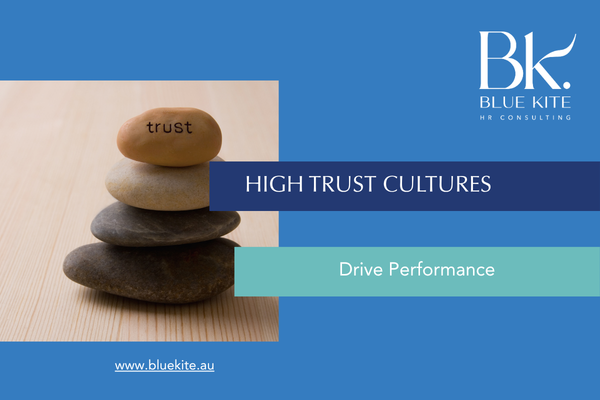
Resilience has become a frequently used term in workplaces, often associated with toughness or the ability to “push through”.

In reality, resilient teams are not those that simply endure pressure. They are those that can adapt, recover and continue to perform effectively in changing conditions.

In an environment where change is constant—whether driven by market shifts, technology, restructuring or evolving expectations—resilience is no longer optional. It is a core capability.

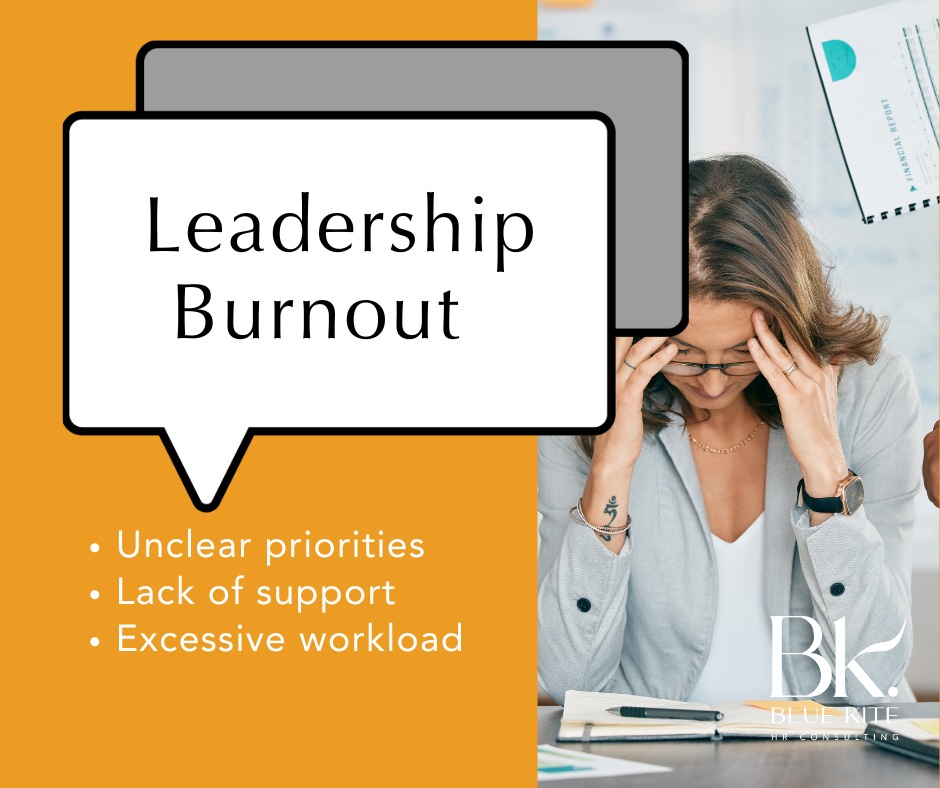
Building resilient teams starts with clarity. People need to understand priorities, expectations and what success looks like, even when circumstances shift. Without this, change can quickly lead to confusion and disengagement.

Support is equally important. Leaders play a key role in recognising when pressure is building and responding early. This does not mean removing accountability, but it does mean creating an environment where challenges can be raised and addressed constructively.

Autonomy also contributes to resilience. Teams that are trusted to make decisions and solve problems are better equipped to respond quickly and effectively when things change. Overly controlled environments, on the other hand, can slow response times and reduce confidence.

Finally, resilience is strengthened by culture. Teams that feel psychologically safe, connected and valued are more likely to collaborate, support each other and navigate uncertainty together.

Resilience is not about asking people to do more with less indefinitely. It is about equipping teams with the conditions, capability and confidence to manage change well.

Positive psychology isn’t about ignoring challenges—it’s about amplifying strengths.

When organisations focus on what people do well, rather than only what needs fixing, performance improves.

Get on the waitlist for my Blue Kite HR Advisory Portal, here.
 

BACK TO ALL ARTICLES
Screenshot 2025-11-18 164639

+61 (0) 409 545 634

cpaterson@bluekite.au

FREE CONSULTATION

  • ABOUT
  • HR SERVICES
  • COACH WITH ME
  • HEALTH & WELLBEING
  • MEDIA/PR
  • ARTICLES/BLOG
  • RESOURCES
  • CONTACT
  • PRIVACY

Blue Kite specialises in providing
HR services to support businesses
to create better workplaces.
Filed Under: Advisory and compliance, Business Update, Career Planning, Change management, Culture, HR essentials, Leadership, Workforce

6 June, 2026 by Bronwyn Coulthart Leave a Comment

The Power of Coaching: Developing Intentional Leaders for Lasting Impact

ARTICLES

The Power of Coaching: Developing Intentional Leaders for Lasting Impact

6 June, 2026
Filed Under: Business Update, Career Planning, Change management, Culture, HR essentials, Leadership, Workforce

Coaching is increasingly recognised as one of the most effective ways to develop leadership capability, yet many businesses still underutilise it.

Traditional leadership development often focuses on knowledge transfer—courses, frameworks and models. While useful, these approaches alone rarely change behaviour in a meaningful or lasting way.

Coaching works differently. It creates space for leaders to reflect, challenge their assumptions and build self-awareness. Rather than being told what to do, leaders are guided to think more critically, make better decisions and take greater ownership of their impact.

Intentional leadership does not happen by accident. It requires conscious effort, ongoing development and the willingness to examine how one’s behaviour influences others. Coaching supports this process by helping leaders understand not just what they do, but how they do it—and why it matters.

Businesses that embed coaching into their leadership approach often see stronger engagement, improved communication and more consistent performance across teams. Leaders become more adaptable, better equipped to manage complexity and more confident in navigating difficult conversations.

Importantly, coaching is not only for senior leaders. It can be applied at multiple levels to build capability throughout the business. When leaders adopt a coaching mindset in their day-to-day interactions, it creates a ripple effect—developing others, strengthening accountability and supporting a more empowered culture.

In a changing workplace, the ability to think, adapt and lead intentionally is critical. Coaching is one of the most practical and impactful ways to build that capability.

Get on the waitlist for my Blue Kite HR Advisory Portal, here.

BACK TO ALL ARTICLES
Screenshot 2025-11-18 164639

+61 (0) 409 545 634

cpaterson@bluekite.au

FREE CONSULTATION

  • ABOUT
  • HR SERVICES
  • COACH WITH ME
  • HEALTH & WELLBEING
  • MEDIA/PR
  • ARTICLES/BLOG
  • RESOURCES
  • CONTACT
  • PRIVACY

Blue Kite specialises in providing
HR services to support businesses
to create better workplaces.
Filed Under: Business Update, Career Planning, Change management, Culture, HR essentials, Leadership, Workforce

4 June, 2026 by Bronwyn Coulthart Leave a Comment

The Hybrid Workforce: What the New Working From Home Laws Actually Mean

ARTICLES

The Hybrid Workforce: What the New Working From Home Laws Actually Mean

4 June, 2026
Filed Under: Advisory and compliance, Business Update, Career Planning, Change management, Culture, HR essentials, Leadership, Workforce

I recently appeared on Ticker News to talk about one of the most significant shifts in Australian employment law in years — the new working from home legislation. But the conversation I wanted to have wasn’t just about the law. It was about everything the law assumes your business already has in place.

Because here’s the truth: most businesses don’t.

What’s Actually Changing

Let’s start with the facts, because there’s a lot of noise out there.

From 1 September 2026, Victorian employees who can reasonably perform their role from home will have a statutory right to work from home for at least two days per week. This right is being enshrined in the Equal Opportunity Act 2010, making Victoria the first jurisdiction in the world to legislate WFH as a protected entitlement.

If your business has fewer than 15 employees, you have a little more time, the law applies to you from 1 July 2027. But don’t let that lull you into inaction.

Disputes won’t go to the Fair Work Commission. They’ll go to the Victorian Equal Opportunity and Human Rights Commission (VEOHRC) for conciliation first, and then to VCAT if unresolved. That’s a different process, a different regulator, and a different compliance framework than most employers are used to.

And here’s what many Victorian businesses are missing: this sits on top of your existing federal obligations. Section 65 of the Fair Work Act 2009 already gives eligible employees the right to request flexible working arrangements, and since 2023, the Fair Work Commission has had the power to arbitrate when employers refuse. That means you’re operating under two frameworks simultaneously, and non-compliance with either carries real risk.

The Case Nobody Is Talking About

While everyone has been focused on the Victorian legislation, there’s a live proceeding at the Fair Work Commission that could have even broader national implications.

The case initiated by the FWC on its own motion is examining whether a working from home term should be inserted into the Clerks – Private Sector Award 2020. The Australian Services Union is seeking a presumed right to work from home when reasonably requested. Not a right to ask. A presumed right. That’s a fundamental shift in where the burden of justification sits.

Currently, employees need to justify why they should be allowed to work from home. Under the proposed model, employers would need to justify why they can’t accommodate it. The proposed clause also includes a minimum of two WFH days per week and a 26-week notice period for any employer wanting to mandate a return to office.

If this gets up, it affects approximately 1.8 million workers covered by the Clerks Award, and legal experts have been clear that it could set a precedent flowing into other modern awards.

Final hearings ran through February 2026. A determination is expected soon.

The question isn’t whether this will affect your business. The question is: are you ready if it does?

The Real Problem Nobody Is Naming

Here’s what I said on Ticker News, and I’ll say it again here: the legislation answers the question of whether people can work from home. It doesn’t answer the much harder question — whether your managers know how to lead them fairly when they do.

Most leadership capability in Australian business was built for in-person, visibility-based management. You could see who was working hard. You could catch issues in the hallway. Performance conversations happened naturally. That model doesn’t translate to hybrid, and the gap is bigger than most businesses realise.

When managers can’t rely on visibility, they default to instinct. And instinct, in a hybrid environment, is often legally risky.

Proximity Bias: The Hidden Hazard in Your Hybrid Model

There’s a specific risk I want to name, because it’s real, it’s measurable, and almost no one businesses are talking about it: proximity bias.

Research consistently shows that employees who are in the office more are perceived as harder working, more committed, and more promotable, regardless of their actual output.

It’s not deliberate discrimination. It’s a deeply human cognitive bias. But in a hybrid workforce, it creates a two-tiered workplace where remote workers are systematically disadvantaged in performance reviews, promotion decisions, and workload allocation.

Under Australia’s psychosocial hazard frameworks, exclusion and inequitable treatment are recognised risks that employers have a duty to manage. Proximity bias doesn’t just damage your culture — it creates legal exposure.

If your hybrid model is quietly favouring in-office workers without your leaders even realising it, you have a problem. And now, with legislation in place to support hybrid work, that problem has teeth.

A Policy Is Not a Strategy

I want to be direct about something. Most businesses will respond to this legislation by updating a policy document. And while that’s a necessary starting point, it is not enough.

A policy that says ’employees may work from home two days per week’ does nothing to address:

  • How performance will be fairly measured across different locations
  • How managers will communicate inclusively — not defaulting to ad hoc hallway conversations that exclude remote workers
  • How team culture is maintained when people are dispersed across home and office
  • How you’ll handle a psychosocial complaint from a remote worker who feels excluded or overlooked

The businesses that will struggle with this legislation are the ones who treat compliance as a document exercise. The ones who will get it right are the ones who treat hybrid work as a people strategy question.

What Employers Need to Do — Right Now

Whether you’re in Victoria or operating nationally, here’s the practical reality of what needs to happen before this law takes effect.

1. Know your obligations — all of them.

Victorian employers need to understand both the state framework and the federal Fair Work Act. If you operate across multiple states, your employees may have different entitlements depending on where they’re based. That complexity needs to be managed proactively, not reactively.

2. Document everything.

The Fair Work Commission has been clear: employers can refuse WFH requests, but only with genuine, written business grounds and within the required 21-day response timeframe. Verbal decisions, informal conversations, and undocumented reasoning are the decisions that end up going against employers.

3. Update both your employment agreements AND your policies.

Most businesses focus on one and neglect the other. Your employment agreements need to reflect your current hybrid arrangements. Misalignment between what your contracts say and how your workplace actually operates is a compliance risk, and one of the most common gaps I find in HR audits.

4. Build real leader capability.

Not a one-hour webinar. Not a policy to sign off on. Actual training in how to manage performance remotely, how to run inclusive hybrid team meetings, and how to identify and counteract proximity bias in their own decision-making.

5. The deadline is not September. The deadline is now.

Getting your policies right, updating your employment agreements, and building leader capability takes time. If you wait until August to start, you won’t be ready.

The Shift That Changes Everything

The law is moving — and it’s moving in one clear direction.

From ‘you need permission to work from home’ to ‘you need a reason to make someone come in.’

That is a fundamental shift in where the burden of justification sits. And most Australian businesses haven’t noticed yet.

We’re in a moment where employment law is ahead of leadership capability in most workplaces. That gap, between what the law now expects and what most managers are equipped to do, is where the risk lives. It’s also where the opportunity lives, for the businesses willing to move first.

────────────────────────────────────────────────────────

Catie Paterson is the founder of Blue Kite HR Consulting, with over 20 years of experience supporting Australian businesses to build better, legally compliant workplaces. We provide practical, no-nonsense HR solutions for businesses of all sizes.

To discuss your hybrid work arrangements and what you need to have in place before September 2026, visit bluekite.au or connect with Catie on LinkedIn.

────────────────────────────────────────────────────────

This article is intended as general information only and does not constitute legal advice. For advice specific to your business and workforce, seek guidance from a qualified HR or employment law professional.


BACK TO ALL ARTICLES
Screenshot 2025-11-18 164639

+61 (0) 409 545 634

cpaterson@bluekite.au

FREE CONSULTATION

  • ABOUT
  • HR SERVICES
  • COACH WITH ME
  • HEALTH & WELLBEING
  • MEDIA/PR
  • ARTICLES/BLOG
  • RESOURCES
  • CONTACT
  • PRIVACY

Blue Kite specialises in providing
HR services to support businesses
to create better workplaces.
Filed Under: Advisory and compliance, Business Update, Career Planning, Change management, Culture, HR essentials, Leadership, Workforce

26 March, 2020 by Bronwyn Coulthart Leave a Comment

Managing people through change

ARTICLES

Managing people through change

26 March, 2020
Filed Under: Career Planning, Change management, Culture, HR essentials, Leadership, Workforce

Organisational change continues to be difficult for many businesses as we adapt to sudden shifts in our industry, new business models that may be required and even external factors including pandemics such as COVID-19.

What is Change Management?

Change management is a structured approach that helps businesses be prepared, equipped and support individuals to adapt change that delivers a positive outcome for the business and its people.

A change could be a simple process within your business that needs adjusting or it could be a major change in policy or strategy that’s required to further leverage your business potential within your industry and even grow.

This structured approach focuses on the wider impact change may have for your people and how they, as individuals and even teams, transition from the current situation to a new one.

Change Management

How do we continue to adapt to change and make sure that we’re keeping our people informed?

With digital technologies and the changing nature of the workforce creating new opportunities and challenges for businesses each and every day we need to make sure that we are building a foundation that incorporates change in a positive way and continues to involve people at every level across the business.

As human beings we are generally averse to change especially if it may be misaligned to our own beliefs or actions or thrown upon us without any understanding of why this change may be required.

For any business to adapt to change it’s important that people understand why it’s happening and leaders don’t assume that this transformation is clear to the whole business. Clear communication is a fundamental avenue that leaders need to develop to help all employees understand where the company is headed, why it is changing, and why this change is important.

Change Management

What are some of the warning signs when it comes to change management?

— Are any of your employees on edge?

— Does your leadership team focus on adverse outcomes or problems?

— Are your employees unclear about expectations?

— Are your employees working on multiple projects but don’t know which ones are priorities?

— Is there a lack of planning that require urgent results?

— Do you not have an approved change plan?

— Has the change happened without any monitoring?

— Has the change been implemented with no change policy and procedures?


Who is responsible for change and how should it be incorporated into your business?

For change management to be successful it is the responsibility of the leadership team to engage, inspire and support employees to adopt the change and the individual employees’ responsibility to change their behaviour to start a new way of working.

Here are five key steps to consider when incorporating change into your business:

Success – Best chance of success when everyone with authority and influence is engaged.

Adapt – Always assess and adapt. Assess what is working and adjust next steps.

Execute – Leadership team should NEVER delegate execution.

Delivering change is running business 

Don’t rely on past work, assumptions 

Pre-work to determine legitimate case for change

All – More efficient to bring people along with you on the journey. Lead with process and make sure all of it is in place such as training, incentives, procedures and processes.

New – Define essential behaviours that are vital. Leadership team must visibly model new behaviours. Behaviours shift when procedures change and incentives are in place.  

BACK TO ALL ARTICLES
Screenshot 2025-11-18 164639

+61 (0) 409 545 634

cpaterson@bluekite.au

FREE CONSULTATION

  • ABOUT
  • HR SERVICES
  • COACH WITH ME
  • HEALTH & WELLBEING
  • MEDIA/PR
  • ARTICLES/BLOG
  • RESOURCES
  • CONTACT
  • PRIVACY

Blue Kite specialises in providing
HR services to support businesses
to create better workplaces.
Filed Under: Career Planning, Change management, Culture, HR essentials, Leadership, Workforce Tagged With: blog, bluekite, business planning, catie paterson, change management, consulting, hr, hr consulting, hr industry, hr support, hr tips, human resources, melbourne business, melbourne hr, melbourne hr consultant, succession management, tips

21 March, 2019 by Bronwyn Coulthart Leave a Comment

The Importance of Career Planning & Succession Management Within the Workplace: Part 2

ARTICLES

The Importance of Career Planning & Succession Management Within the Workplace: Part 2

21 March, 2019
Filed Under: Career Planning, Change management, Succession Management

In Part 1 of this topic I introduced the concept of succession management and the importance of career planning when it comes to retaining your employees and creating a culture of growth. In Part 2 we’ll dive deeper into the individual needs of your employees and how communication is central to the success of your ongoing succession plan.

Effective succession planning goes beyond a one-time event; it’s important to plan with your team and encourage the continual development of your staff through mentoring, regular check-ins, goal setting and strategic evaluation over time. Career plans are no longer static, and as companies continue to downsize and flatten, traditional career ladders are becoming less prevalent. Instead, helping your employees seek opportunities to grow and having authentic, timely conversations about their personal and professional goals can have a huge influence on how engaged they are, their perception of where or how they work, and how supported they feel on their professional journey.

Particularly when managing a multi-generational workforce, each of these different demographics has varying needs, wants and expectations. Baby boomers, for example, might have typically enjoyed decade-long careers while millennials will seek multiple jobs throughout their lifetime. With this in mind, succession planning then isn’t just about finding the right talent, but also dealing with high rates of turnover within younger generations. Yet in the race to replace older generations and retain the millennials, it’s important you don’t forget about Gen X. This demographic is often next in line to step into leadership roles as older generations move into retirement, but if they’re continually looked over in favour of millennials or sense a ‘grey ceiling’ looming above them, they might leave to follow their career dreams elsewhere.

Once stripped back, the common thread is all about communication. Communicating and planning across the board is essential, not only regarding succession management but planning for growth and being prepared for successions when they arrive. Staying ahead of the curve by understanding each employee’s individual growth trajectory and communicating openly with your team has long-lasting results; effective leadership means less about ruling from the top, and more about identifying if the people who work beneath you are growing and developing.

It’s important to really know your team; we’re all humans after all – each with varying aspirations, attitudes, skills, goals and dreams – and it’s human nature to want to grow, whether that’s learning a new skill to advance your career, embracing new responsibilities, or exploring ways to find happiness and challenges in your day-today that might simultaneously help your company too.

Communication is imperative and working with your team to plan for and execute an effective growth strategy requires the right tools to do so. Inspired by my passion for strategising and deep interest in culture and career development, I’m excited to announce that I’ve recently finished working on a customised business planning system that’s finally ready to launch in the market. It’s been built using years of industry knowledge and experience, drawing upon case studies and fervent analysis of the ins and outs of career planning and succession management.

If you’re looking to adopt an innovative and cost-effective approach in the new financial year, I’d love to hear from you.

BACK TO ALL ARTICLES
Screenshot 2025-11-18 164639

+61 (0) 409 545 634

cpaterson@bluekite.au

FREE CONSULTATION

  • ABOUT
  • HR SERVICES
  • COACH WITH ME
  • HEALTH & WELLBEING
  • MEDIA/PR
  • ARTICLES/BLOG
  • RESOURCES
  • CONTACT
  • PRIVACY

Blue Kite specialises in providing
HR services to support businesses
to create better workplaces.

Filed Under: Career Planning, Change management, Succession Management Tagged With: blog, bluekite, business planning, catie paterson, catie paterson consulting, consulting, hr, hr consulting, hr industry, hr support, hr tips, human resources, melbourne business, melbourne hr, melbourne hr consultant, succession management, tips, top tips

  • « Go to Previous Page
  • Page 1
  • Page 2
  • Page 3
  • Page 4

Copyright © 2026 · Executive Pro on Genesis Framework · WordPress · Log in koopo

  • HOME
  • ABOUT US
  • HR SERVICES
  • COACH WITH ME
  • HEALTH & WELLBEING
  • MEDIA/PR
    • – Articles/Blogs
    • – Keynote Speaking Events
    • – Podcast Interviews
    • – Ticker Interviews
  • BLOG
  • RESOURCES
  • CONTACT