
• Skip to primary navigation
  • Skip to main content

BlueKite HR

  • HOME
  • ABOUT US
  • HR SERVICES
  • COACH WITH ME
  • HEALTH & WELLBEING
  • MEDIA/PR
    • – Articles/Blogs
    • – Keynote Speaking Events
    • – Podcast Interviews
    • – Ticker Interviews
  • BLOG
  • RESOURCES
  • CONTACT

Business Update

7 June, 2026 by Bronwyn Coulthart Leave a Comment

Building Resilient Teams in an Era of Constant Change

ARTICLES

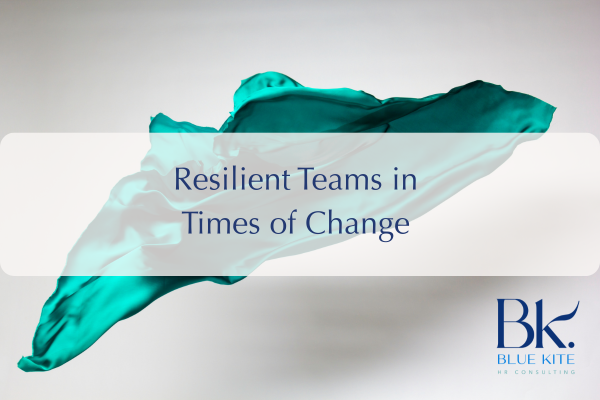
Building Resilient Teams in an Era of Constant Change
7 June, 2026
Filed Under: Advisory and compliance, Business Update, Career Planning, Change management, Culture, HR essentials, Leadership, Workforce

Resilience has become a frequently used term in workplaces, often associated with toughness or the ability to “push through”.

In reality, resilient teams are not those that simply endure pressure. They are those that can adapt, recover and continue to perform effectively in changing conditions.

In an environment where change is constant—whether driven by market shifts, technology, restructuring or evolving expectations—resilience is no longer optional. It is a core capability.

Building resilient teams starts with clarity. People need to understand priorities, expectations and what success looks like, even when circumstances shift. Without this, change can quickly lead to confusion and disengagement.

Support is equally important. Leaders play a key role in recognising when pressure is building and responding early. This does not mean removing accountability, but it does mean creating an environment where challenges can be raised and addressed constructively.

Autonomy also contributes to resilience. Teams that are trusted to make decisions and solve problems are better equipped to respond quickly and effectively when things change. Overly controlled environments, on the other hand, can slow response times and reduce confidence.

Finally, resilience is strengthened by culture. Teams that feel psychologically safe, connected and valued are more likely to collaborate, support each other and navigate uncertainty together.

Resilience is not about asking people to do more with less indefinitely. It is about equipping teams with the conditions, capability and confidence to manage change well.

Positive psychology isn’t about ignoring challenges—it’s about amplifying strengths.

When organisations focus on what people do well, rather than only what needs fixing, performance improves.

Get on the waitlist for my Blue Kite HR Advisory Portal, here.
 

BACK TO ALL ARTICLES
Screenshot 2025-11-18 164639

+61 (0) 409 545 634

cpaterson@bluekite.au

FREE CONSULTATION

  • ABOUT
  • HR SERVICES
  • COACH WITH ME
  • HEALTH & WELLBEING
  • MEDIA/PR
  • ARTICLES/BLOG
  • RESOURCES
  • CONTACT
  • PRIVACY

Blue Kite specialises in providing
HR services to support businesses
to create better workplaces.
Filed Under: Advisory and compliance, Business Update, Career Planning, Change management, Culture, HR essentials, Leadership, Workforce

6 June, 2026 by Bronwyn Coulthart Leave a Comment

The Power of Coaching: Developing Intentional Leaders for Lasting Impact

ARTICLES

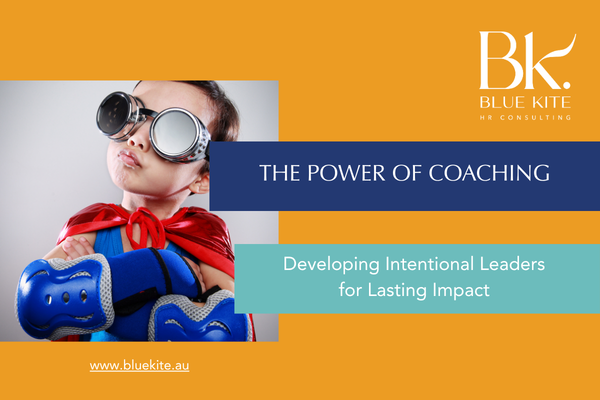
The Power of Coaching: Developing Intentional Leaders for Lasting Impact

6 June, 2026
Filed Under: Business Update, Career Planning, Change management, Culture, HR essentials, Leadership, Workforce

Coaching is increasingly recognised as one of the most effective ways to develop leadership capability, yet many businesses still underutilise it.

Traditional leadership development often focuses on knowledge transfer—courses, frameworks and models. While useful, these approaches alone rarely change behaviour in a meaningful or lasting way.

Coaching works differently. It creates space for leaders to reflect, challenge their assumptions and build self-awareness. Rather than being told what to do, leaders are guided to think more critically, make better decisions and take greater ownership of their impact.

Intentional leadership does not happen by accident. It requires conscious effort, ongoing development and the willingness to examine how one’s behaviour influences others. Coaching supports this process by helping leaders understand not just what they do, but how they do it—and why it matters.

Businesses that embed coaching into their leadership approach often see stronger engagement, improved communication and more consistent performance across teams. Leaders become more adaptable, better equipped to manage complexity and more confident in navigating difficult conversations.

Importantly, coaching is not only for senior leaders. It can be applied at multiple levels to build capability throughout the business. When leaders adopt a coaching mindset in their day-to-day interactions, it creates a ripple effect—developing others, strengthening accountability and supporting a more empowered culture.

In a changing workplace, the ability to think, adapt and lead intentionally is critical. Coaching is one of the most practical and impactful ways to build that capability.

Get on the waitlist for my Blue Kite HR Advisory Portal, here.

BACK TO ALL ARTICLES
Screenshot 2025-11-18 164639

+61 (0) 409 545 634

cpaterson@bluekite.au

FREE CONSULTATION

  • ABOUT
  • HR SERVICES
  • COACH WITH ME
  • HEALTH & WELLBEING
  • MEDIA/PR
  • ARTICLES/BLOG
  • RESOURCES
  • CONTACT
  • PRIVACY

Blue Kite specialises in providing
HR services to support businesses
to create better workplaces.
Filed Under: Business Update, Career Planning, Change management, Culture, HR essentials, Leadership, Workforce

5 June, 2026 by Bronwyn Coulthart Leave a Comment

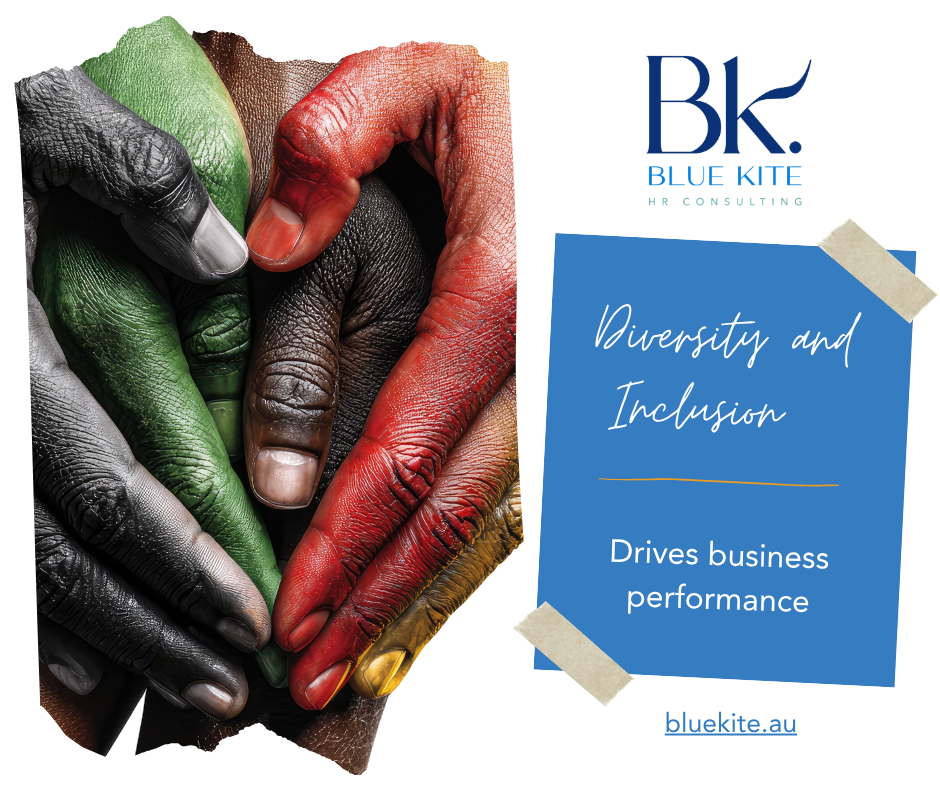
How Diversity and Inclusion Drive Business Performance (Not Just Compliance)

ARTICLES

How Diversity and Inclusion Drive Business Performance (Not Just Compliance)

5 June, 2026
Filed Under: Advisory and compliance, Business Update, HR essentials, Leadership, Workforce, Workforce Planning

Diversity and inclusion are still too often framed as compliance issues—as obligations to manage, report on or address when required.

But organisations that approach them only through a compliance lens miss the bigger opportunity. Diversity and inclusion, when genuinely embedded, can drive stronger decision-making, better innovation and improved business performance.

Diversity brings difference. Different backgrounds, perspectives, experiences and ways of thinking can strengthen how teams solve problems, identify risks and generate ideas. But diversity alone is not enough. Without inclusion, those perspectives may never be heard, valued or used effectively.

That is why inclusion matters just as much as representation. An inclusive workplace is one where people feel safe to contribute, challenge ideas, ask questions and bring more of their perspective to the table. When that happens, the organisation benefits—not just culturally, but commercially.

Inclusive and diverse teams are often better equipped to understand customers, respond to complexity and avoid groupthink. They tend to ask better questions and produce stronger outcomes because they are not all approaching issues from the same angle.

Of course, compliance still matters. Businesses must meet their legal obligations and take discrimination, equity and fair treatment seriously. But reducing diversity and inclusion to compliance misses the strategic value.

The more useful question is not “How do we meet the minimum standard?” It is “How do we create an environment where difference contributes to better results?”

When diversity and inclusion are treated as business enablers rather than box-ticking exercises, organisations position themselves to perform better, adapt more effectively and build stronger cultures over time.

Get on the waitlist for my Blue Kite HR Advisory Portal, here.


BACK TO ALL ARTICLES
Screenshot 2025-11-18 164639

+61 (0) 409 545 634

cpaterson@bluekite.au

FREE CONSULTATION

  • ABOUT
  • HR SERVICES
  • COACH WITH ME
  • HEALTH & WELLBEING
  • MEDIA/PR
  • ARTICLES/BLOG
  • RESOURCES
  • CONTACT
  • PRIVACY

Blue Kite specialises in providing
HR services to support businesses
to create better workplaces.
Filed Under: Advisory and compliance, Business Update, HR essentials, Leadership, Workforce, Workforce Planning

4 June, 2026 by Bronwyn Coulthart Leave a Comment

The Hybrid Workforce: What the New Working From Home Laws Actually Mean

ARTICLES

The Hybrid Workforce: What the New Working From Home Laws Actually Mean

4 June, 2026
Filed Under: Advisory and compliance, Business Update, Career Planning, Change management, Culture, HR essentials, Leadership, Workforce

I recently appeared on Ticker News to talk about one of the most significant shifts in Australian employment law in years — the new working from home legislation. But the conversation I wanted to have wasn’t just about the law. It was about everything the law assumes your business already has in place.

Because here’s the truth: most businesses don’t.

What’s Actually Changing

Let’s start with the facts, because there’s a lot of noise out there.

From 1 September 2026, Victorian employees who can reasonably perform their role from home will have a statutory right to work from home for at least two days per week. This right is being enshrined in the Equal Opportunity Act 2010, making Victoria the first jurisdiction in the world to legislate WFH as a protected entitlement.

If your business has fewer than 15 employees, you have a little more time, the law applies to you from 1 July 2027. But don’t let that lull you into inaction.

Disputes won’t go to the Fair Work Commission. They’ll go to the Victorian Equal Opportunity and Human Rights Commission (VEOHRC) for conciliation first, and then to VCAT if unresolved. That’s a different process, a different regulator, and a different compliance framework than most employers are used to.

And here’s what many Victorian businesses are missing: this sits on top of your existing federal obligations. Section 65 of the Fair Work Act 2009 already gives eligible employees the right to request flexible working arrangements, and since 2023, the Fair Work Commission has had the power to arbitrate when employers refuse. That means you’re operating under two frameworks simultaneously, and non-compliance with either carries real risk.

The Case Nobody Is Talking About

While everyone has been focused on the Victorian legislation, there’s a live proceeding at the Fair Work Commission that could have even broader national implications.

The case initiated by the FWC on its own motion is examining whether a working from home term should be inserted into the Clerks – Private Sector Award 2020. The Australian Services Union is seeking a presumed right to work from home when reasonably requested. Not a right to ask. A presumed right. That’s a fundamental shift in where the burden of justification sits.

Currently, employees need to justify why they should be allowed to work from home. Under the proposed model, employers would need to justify why they can’t accommodate it. The proposed clause also includes a minimum of two WFH days per week and a 26-week notice period for any employer wanting to mandate a return to office.

If this gets up, it affects approximately 1.8 million workers covered by the Clerks Award, and legal experts have been clear that it could set a precedent flowing into other modern awards.

Final hearings ran through February 2026. A determination is expected soon.

The question isn’t whether this will affect your business. The question is: are you ready if it does?

The Real Problem Nobody Is Naming

Here’s what I said on Ticker News, and I’ll say it again here: the legislation answers the question of whether people can work from home. It doesn’t answer the much harder question — whether your managers know how to lead them fairly when they do.

Most leadership capability in Australian business was built for in-person, visibility-based management. You could see who was working hard. You could catch issues in the hallway. Performance conversations happened naturally. That model doesn’t translate to hybrid, and the gap is bigger than most businesses realise.

When managers can’t rely on visibility, they default to instinct. And instinct, in a hybrid environment, is often legally risky.

Proximity Bias: The Hidden Hazard in Your Hybrid Model

There’s a specific risk I want to name, because it’s real, it’s measurable, and almost no one businesses are talking about it: proximity bias.

Research consistently shows that employees who are in the office more are perceived as harder working, more committed, and more promotable, regardless of their actual output.

It’s not deliberate discrimination. It’s a deeply human cognitive bias. But in a hybrid workforce, it creates a two-tiered workplace where remote workers are systematically disadvantaged in performance reviews, promotion decisions, and workload allocation.

Under Australia’s psychosocial hazard frameworks, exclusion and inequitable treatment are recognised risks that employers have a duty to manage. Proximity bias doesn’t just damage your culture — it creates legal exposure.

If your hybrid model is quietly favouring in-office workers without your leaders even realising it, you have a problem. And now, with legislation in place to support hybrid work, that problem has teeth.

A Policy Is Not a Strategy

I want to be direct about something. Most businesses will respond to this legislation by updating a policy document. And while that’s a necessary starting point, it is not enough.

A policy that says ’employees may work from home two days per week’ does nothing to address:

  • How performance will be fairly measured across different locations
  • How managers will communicate inclusively — not defaulting to ad hoc hallway conversations that exclude remote workers
  • How team culture is maintained when people are dispersed across home and office
  • How you’ll handle a psychosocial complaint from a remote worker who feels excluded or overlooked

The businesses that will struggle with this legislation are the ones who treat compliance as a document exercise. The ones who will get it right are the ones who treat hybrid work as a people strategy question.

What Employers Need to Do — Right Now

Whether you’re in Victoria or operating nationally, here’s the practical reality of what needs to happen before this law takes effect.

1. Know your obligations — all of them.

Victorian employers need to understand both the state framework and the federal Fair Work Act. If you operate across multiple states, your employees may have different entitlements depending on where they’re based. That complexity needs to be managed proactively, not reactively.

2. Document everything.

The Fair Work Commission has been clear: employers can refuse WFH requests, but only with genuine, written business grounds and within the required 21-day response timeframe. Verbal decisions, informal conversations, and undocumented reasoning are the decisions that end up going against employers.

3. Update both your employment agreements AND your policies.

Most businesses focus on one and neglect the other. Your employment agreements need to reflect your current hybrid arrangements. Misalignment between what your contracts say and how your workplace actually operates is a compliance risk, and one of the most common gaps I find in HR audits.

4. Build real leader capability.

Not a one-hour webinar. Not a policy to sign off on. Actual training in how to manage performance remotely, how to run inclusive hybrid team meetings, and how to identify and counteract proximity bias in their own decision-making.

5. The deadline is not September. The deadline is now.

Getting your policies right, updating your employment agreements, and building leader capability takes time. If you wait until August to start, you won’t be ready.

The Shift That Changes Everything

The law is moving — and it’s moving in one clear direction.

From ‘you need permission to work from home’ to ‘you need a reason to make someone come in.’

That is a fundamental shift in where the burden of justification sits. And most Australian businesses haven’t noticed yet.

We’re in a moment where employment law is ahead of leadership capability in most workplaces. That gap, between what the law now expects and what most managers are equipped to do, is where the risk lives. It’s also where the opportunity lives, for the businesses willing to move first.

────────────────────────────────────────────────────────

Catie Paterson is the founder of Blue Kite HR Consulting, with over 20 years of experience supporting Australian businesses to build better, legally compliant workplaces. We provide practical, no-nonsense HR solutions for businesses of all sizes.

To discuss your hybrid work arrangements and what you need to have in place before September 2026, visit bluekite.au or connect with Catie on LinkedIn.

────────────────────────────────────────────────────────

This article is intended as general information only and does not constitute legal advice. For advice specific to your business and workforce, seek guidance from a qualified HR or employment law professional.


BACK TO ALL ARTICLES
Screenshot 2025-11-18 164639

+61 (0) 409 545 634

cpaterson@bluekite.au

FREE CONSULTATION

  • ABOUT
  • HR SERVICES
  • COACH WITH ME
  • HEALTH & WELLBEING
  • MEDIA/PR
  • ARTICLES/BLOG
  • RESOURCES
  • CONTACT
  • PRIVACY

Blue Kite specialises in providing
HR services to support businesses
to create better workplaces.
Filed Under: Advisory and compliance, Business Update, Career Planning, Change management, Culture, HR essentials, Leadership, Workforce

2 June, 2026 by Bronwyn Coulthart Leave a Comment

Why Employee Wellbeing Will Be the Next Competitive Advantage

ARTICLES

Why Employee Wellbeing Will Be the Next Competitive Advantage

2 June, 2026
Filed Under: Advisory and compliance, Business Update, Culture, HR essentials, Workforce

For years, employee wellbeing was often treated as a “nice to have”—something associated with morning teas, wellness apps or occasional reminders to take breaks.

That approach is no longer enough. In today’s environment, wellbeing is becoming a serious business issue and, increasingly, a genuine competitive advantage.

When employees are consistently overloaded, unclear on priorities or working in psychologically unsafe environments, the impact is never limited to morale. It shows up in productivity, decision-making, absenteeism, turnover and team performance. Poor wellbeing costs businesses far more than many leaders realise.

On the other hand, organisations that prioritise wellbeing in a meaningful way tend to build stronger, more sustainable performance. Their people are more engaged. Their leaders are better equipped to respond early to pressure points. Their teams are more likely to stay, contribute and adapt during change.

Importantly, employee wellbeing is not about creating a softer workplace. It is about creating a smarter one. It means thinking carefully about workload, leadership behaviour, communication, role clarity, support systems and the overall employee experience. It means recognising that people perform better when they are not operating in a constant state of stress or depletion.

The businesses that understand this will have a clear advantage. They will retain stronger talent, reduce preventable people risks and build healthier cultures that support long-term results.

In the years ahead, wellbeing will not sit on the sidelines of business strategy. It will be part of what sets high-performing organisations apart.

Get on the waitlist for my Blue Kite HR Advisory Portal, here.

BACK TO ALL ARTICLES
Screenshot 2025-11-18 164639

+61 (0) 409 545 634

cpaterson@bluekite.au

FREE CONSULTATION

  • ABOUT
  • HR SERVICES
  • COACH WITH ME
  • HEALTH & WELLBEING
  • MEDIA/PR
  • ARTICLES/BLOG
  • RESOURCES
  • CONTACT
  • PRIVACY

Blue Kite specialises in providing
HR services to support businesses
to create better workplaces.

Filed Under: Advisory and compliance, Business Update, Culture, HR essentials, Workforce

4 May, 2026 by Bronwyn Coulthart Leave a Comment

The Toxic High Performer: A Culture Killer in Disguise

ARTICLES

The Path to CPC: A World of Hotel Management, Hospitality and HR

4 May, 2026
Filed Under: Advisory and compliance, Business Update, Change management, Culture, HR essentials, Leadership

What the Kyle and Jackie O situation highlights

When we talk about toxic workplaces, we often picture obvious villains: aggressive managers, bullies, or people who openly disrespect others. But there’s a quieter, more insidious threat that many businesses overlook—the toxic high performer.

The recent situation involving Kyle and Jackie O at ARN is a stark reminder of what can happen when businesses prioritise results over behaviour, and why that choice can destroy the culture from the inside out.

The High Performer Paradox 

High performers deliver. They hit targets, bring in revenue, and often become indispensable to the business. So, when they behave badly, leaders face a dilemma: do we hold them accountable, or do we protect our bottom line?

Many businesses choose the latter. And that’s where the real damage begins.

When Jackie O allegedly made separate complaints to ARN management in July and August, the business faced a choice. Instead of investigating fully and addressing the concerns, it appears they did neither. The message this sent to every other employee was crystal clear: if you’re valuable enough, the rules don’t apply to you.

That’s not just unfair. It’s a culture killer.

Why Toxic Performers Are Worse Than You Think

A toxic high performer isn’t just one person behaving badly. They’re a psychological hazard that contaminates the entire workplace.

Here’s what happens:

  • Your good people leave. When employees see that poor behaviour is tolerated because someone delivers results, they lose faith in leadership. They stop believing that respect, fairness, or wellbeing actually do matter. The first chance they get, they’re gone. You don’t lose your toxic high performer – you lose your best people.
  • Psychological safety evaporates. Psychological safety is the foundation of a healthy workplace. It’s the belief that you can speak up, take risks, and be yourself without fear of punishment or humiliation. A toxic high performer destroys that. Their colleagues walk on eggshells. They avoid them. They stop speaking up. And when people stop speaking up, problems don’t get solved – they get buried.
  • The message to everyone else is unmistakable. “Results matter more than respect.” That’s the culture you’re building. And once that message takes hold, you have fundamentally shifted what your business values. It’s no longer about collaboration, trust, or doing things the right way. It’s about winning at any cost.
  • Compliance becomes a joke. If leaders won’t enforce standards with high performers, why would anyone else follow them? Your policies, your values, your code of conduct – they all become suggestions rather than rules. And that’s when you become vulnerable to real legal and reputational risk.


What ‘Required Action’ Actually Looks Like 

When psychological safety concerns are raised, employers have a duty of care. That doesn’t mean you have to fire the person. But it does mean you have to act.

Required action means:

  • You don’t minimise it. You take the complaint seriously, regardless of who made it or who it’s about.
  • You don’t wait. You investigate promptly. Delays send a message that the concern isn’t urgent.
  • You don’t treat it as “a personality issue.” This is a workplace conduct issue, and it needs to be managed as such.
  • You assess the risk. What’s the impact on the person who complained? On their team? On the broader culture?
  • You respond proportionately. That might mean coaching, a formal warning, changing reporting lines, or in serious cases, termination. The response should match the severity of the behaviour.
  • You put controls in place. Clear expectations, supervision, documentation, and consequences if the behaviour continues.
  • You demonstrate what you did and why. You can’t just handle it quietly. People need to see that you took action.

The ARN situation suggests that very little of this happened. Complaints were made. It seems they were not investigated fully. And life went on. That’s not duty of care. That’s negligence.

The Real Cost of Protecting Toxic High Performers 

Leaders often think protecting a high performer is the smart business decision. They’re wrong.

Yes, you might lose some revenue short-term if you hold them accountable. But here’s what you gain:

  • Retention of your best people. Your good employees stay because they trust that leadership actually cares about culture.
  • Genuine psychological safety. People speak up. Problems get solved early. Innovation happens.
  • A sustainable culture. You’re not building on a foundation of fear and resentment. You’re building something that lasts.
  • Legal protection. When you can demonstrate that you took concerns seriously and acted appropriately, you’re protected if things escalate.
  • When employees see that standards apply to everyone, they believe in your values. They’re more engaged, more loyal, and more productive.

The Early Warning Signs 

Before a situation becomes as public as the Kyle and Jackie O case, there are usually early warning signs:

  • Increased gossip and conflict around one person
  • People avoiding certain individuals or teams
  • “Jokes” that regularly cross the line
  • Spikes in sick leave or resignations from one team
  • People stop speaking up in meetings

If you’re seeing these signs, you’ve waited too long already. The goal is to spot the pattern early and intervene with clear expectations, coaching, and consequences.

What This Means for Your Business

If you have a high performer who’s also toxic, you have a choice to make. And it’s not really a choice between protecting them or losing revenue. It’s a choice between short-term comfort and long-term culture.

Because here’s the truth: a toxic high performer is still a psychological hazard. And often, they’re a culture killer.

If you excuse their behaviour, you’re not just protecting one person. You’re telling everyone else that results matter more than respect. You’re saying that psychological safety is a nice idea, but not really a priority. You’re building a culture where people are afraid, disengaged, and looking for the exit.

That’s not a sustainable business. That’s a ticking time bomb.

Moving Forward 

Wellbeing as a priority isn’t a statement. It’s action. And it means the standard applies to everyone.

If you’re struggling with a high performer who’s also toxic, or if you’re worried about your culture more broadly, it’s time to act. Assess the risk. Respond proportionately. Put controls in place. And be able to demonstrate what you did and why.

Because in the end, your people are your business. And no single person’s results are worth sacrificing that.

Learn more from my interview on Ticker:

https://www.youtube.com/watch?v=e-uoOFJaO6Q&t=15s 


About the Author 

Catie Paterson is an HR consultant specialising in workplace wellbeing, psychological safety, and leadership development. She works with small to medium businesses to create cultures where people can thrive and businesses can grow. Learn more at bluekite.au


BACK TO ALL ARTICLES
Screenshot 2025-11-18 164639

+61 (0) 409 545 634

cpaterson@bluekite.au

FREE CONSULTATION

  • ABOUT
  • HR SERVICES
  • COACH WITH ME
  • HEALTH & WELLBEING
  • MEDIA/PR
  • ARTICLES/BLOG
  • RESOURCES
  • CONTACT
  • PRIVACY

Blue Kite specialises in providing
HR services to support businesses
to create better workplaces.

Filed Under: Advisory and compliance, Business Update, Change management, Culture, HR essentials, Leadership

  • « Go to Previous Page
  • Page 1
  • Interim pages omitted …
  • Page 14
  • Page 15
  • Page 16
  • Page 17
  • Page 18
  • Page 19
  • Go to Next Page »

Copyright © 2026 · Executive Pro on Genesis Framework · WordPress · Log in koopo

  • HOME
  • ABOUT US
  • HR SERVICES
  • COACH WITH ME
  • HEALTH & WELLBEING
  • MEDIA/PR
    • – Articles/Blogs
    • – Keynote Speaking Events
    • – Podcast Interviews
    • – Ticker Interviews
  • BLOG
  • RESOURCES
  • CONTACT